Indoor cycling is one of the most rewarding workouts you can do without leaving your house. It builds endurance, torches calories, and fits into almost any schedule. However, it comes with a challenge that outdoor riders rarely face: trapped heat.
Outside, the wind keeps you cool. Indoors, that airflow is gone. Your body generates enormous heat during a hard session, and without ventilation to carry it away, your core temperature rises fast. The result is discomfort, reduced power output, and sessions cut short far too early.
The good news is that this problem is completely solvable. With the right environment, habits, and gear, you can train just as hard indoors as you would outside. This guide covers the most effective indoor cycling cooling tips to help you get the most from every ride.
Why Indoor Heat Builds Up Faster Than You Expect
Understanding why you overheat indoors helps you fix the problem more effectively. When you ride outside, forward motion creates a constant stream of air over your skin. That airflow accelerates sweat evaporation, which is your body’s primary cooling mechanism. Even a gentle speed of 15 kilometres per hour produces enough wind to regulate your temperature during moderate effort.
On a stationary bike, that mechanism breaks down. You are not moving through space, so no natural airflow exists. Sweat accumulates on your skin instead of evaporating, your skin temperature rises, and your cardiovascular system works harder to compensate.
Additionally, most home training spaces are not designed with ventilation in mind. A spare room, a garage, or a basement may have limited air exchange. Over the course of a 45-minute session, the air in that room becomes warm and humid. Therefore, without active intervention, conditions deteriorate steadily throughout your ride.
Designing a Cooler Training Environment
Before you buy any equipment or change your habits, start with your training space. Small changes to your environment can make a significant difference right away.
Pick the Right Room
Not all rooms are equal when it comes to heat. Basements tend to stay cooler than upper floors because heat rises. Rooms on the north or east side of your home receive less direct sunlight and stay cooler through the afternoon. If you have a choice, move your bike to the coolest available space.
Avoid rooms with large windows facing west or south, especially if you train in the afternoon or evening. Direct sunlight heats a room quickly, and that heat lingers well into the evening even after the sun goes down.
Create Cross-Ventilation
Opening a single window does very little to move air. Opening two windows on opposite sides of your home, or on different walls of the same room, creates cross-ventilation. Air enters from one side and exits from the other, generating a gentle but consistent flow through your training space.
However, on very hot summer days, the outside air may actually be warmer than your indoor air. In that case, keep windows closed and rely on mechanical cooling instead.
Train at the Coolest Time of Day
Your body and your room will both be cooler in the early morning. Temperatures are lowest just before sunrise and in the first hour or two after it. If your schedule allows, morning sessions reduce your heat burden considerably. Evening sessions after 8 p.m. can also work well in summer, once the outside temperature has dropped and your home has had a chance to cool down.
Choosing and Positioning Fans for Maximum Effect
A fan is the most impactful tool in your cooling setup. However, most people do not use fans as effectively as they could.
Face the Fan Directly at Your Torso
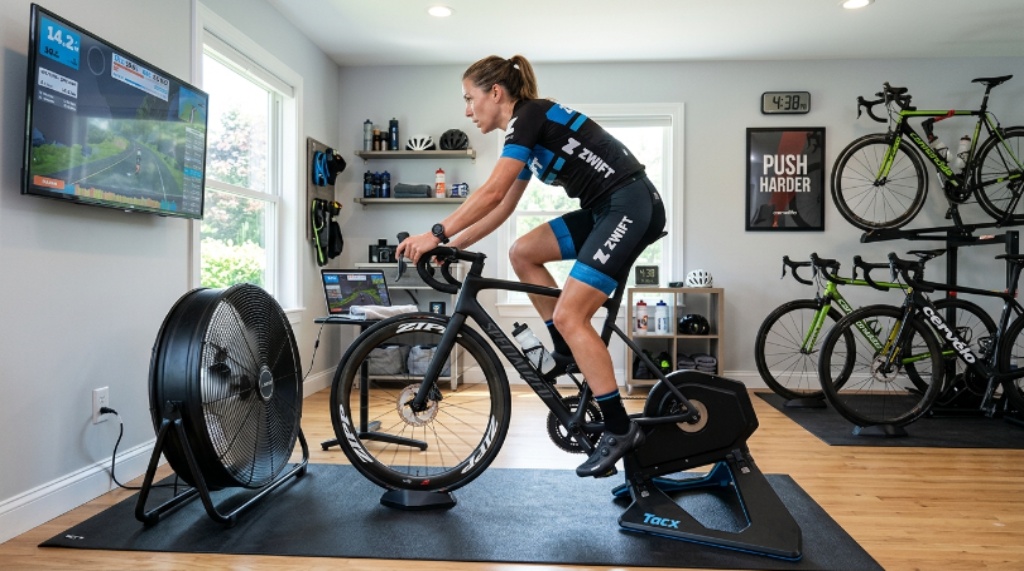
The position of your fan matters more than its size or power. Place it directly in front of you, aimed at your chest and face. This replicates the airflow you experience riding outdoors and dramatically improves sweat evaporation across the largest surface area of your body.
A fan positioned to the side, behind you, or pointing at your legs provides far less benefit. The goal is to move air over your core, where heat generation is highest and where cooling has the most effect on your overall temperature.
Use a High-Velocity Fan for Intense Sessions
Standard desk fans create a gentle breeze. For hard intervals or long endurance rides, you need more. A high-velocity floor fan, the kind used in workshops or commercial gyms, pushes a strong column of air at high speed. This creates much more effective evaporative cooling and makes a dramatic difference during intense efforts.
Add a Second Fan for Full Coverage
Two fans are noticeably better than one. A second fan positioned slightly to one side provides wider coverage and eliminates warm spots. Additionally, running a ceiling fan on its highest setting helps push the warm air that collects near the ceiling back down and out of the room, lowering the ambient temperature throughout your session.
Wearing the Right Kit for Indoor Training
Many cyclists wear the same clothing indoors as they do outside. This is a mistake. Outdoor kit is designed to work alongside airflow and varying temperatures. Indoors, you need something different.
Choose Lightweight, Minimalist Fabric
The lighter and more open your kit, the faster moisture escapes from your skin. Sleeveless jerseys made from thin, open-weave polyester or nylon are ideal. Bib shorts with a lightweight chamois keep padding where you need it without adding unnecessary bulk or weight.
Avoid anything thick, padded, or designed for cold weather. Thermal layers, arm warmers, and heavy jerseys all trap heat. They have no place in an indoor training setup, no matter the season.
Never Train in Cotton
Cotton is one of the worst fabrics for indoor cycling. It absorbs sweat like a sponge but releases it slowly, leaving you in wet, heavy, uncomfortable clothing that clings to your skin. Synthetic fabrics wick moisture away from the skin and allow it to evaporate much faster. This single change is one of the most overlooked sweat control tips for cyclists training at home.
Keep a Cold Towel Within Reach
A small towel soaked in cold water and kept in a bowl of ice beside your bike provides instant relief. Press it against your neck, wrists, and forehead during brief recovery periods. Major blood vessels run close to the skin in these areas, so cooling them has an outsized effect on how your whole body feels. It is a simple trick that experienced indoor cyclists swear by.
Hydration Habits That Support Cooling
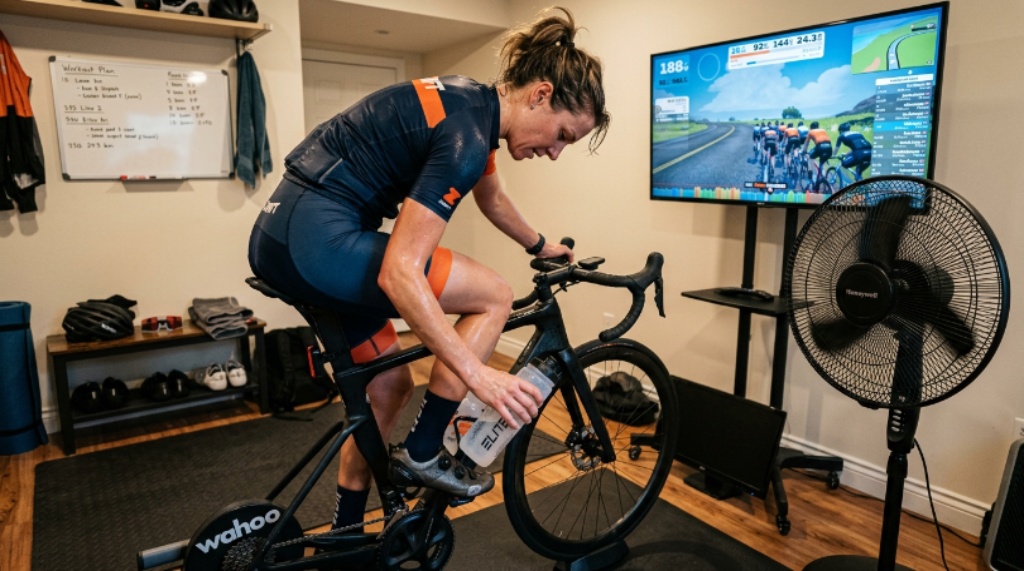
Your body cools itself through sweat. That process only works if you are producing enough fluid to keep it going. Dehydration impairs your cooling system before it affects your muscles, which is why staying on top of fluid intake is essential.
Start Hydrated Before You Clip In
Do not begin your session in a fluid deficit. Drink 400 to 600 millilitres of water in the 60 to 90 minutes before you ride. Arriving well-hydrated gives your body the resources it needs to manage heat from the very first minute.
Drink Consistently Throughout the Ride
Thirst is a late warning signal. By the time you feel it, mild dehydration has already begun. Instead, drink on a schedule. Take 150 to 250 millilitres every 15 minutes regardless of whether you feel thirsty. For sessions under an hour, plain cold water is sufficient. For longer rides, add electrolytes to replace the sodium and potassium lost through heavy sweating.
Use Cold Water and Ice
Cold water cools you from the inside as well as outside. Keep your bottle in the fridge before your session or fill it with ice and water so it stays chilled throughout. Additionally, pouring a small amount of cold water over your wrists or the back of your neck provides a rapid cooling effect that you will feel within seconds.
Using Technology to Control Room Temperature
Fans alone may not be enough during peak summer heat. Combining them with temperature control technology creates a far more comfortable training environment.
Air conditioning is the most effective solution. Set the thermostat to 18 to 20 degrees Celsius and start cooling the room 30 minutes before your session. Cooling a room takes time, so pre-cooling is far more effective than trying to bring the temperature down once you are already in the middle of a hard effort.
Portable evaporative coolers are a more affordable alternative. They push air through water-saturated pads, producing a cool, slightly moist breeze. They work best in dry climates and are energy-efficient enough for daily use. They are not as powerful as air conditioning, but they are significantly more effective than fans alone when temperatures are high.
Cooling Down Properly After Your Session
Your core temperature does not drop the moment you stop pedalling. It stays elevated for several minutes, and how you manage that recovery period affects how you feel for the rest of the day.
Sit in front of your fan for five to ten minutes before heading to the shower. Let your breathing settle and your heart rate come down naturally. This gradual cool-down is gentler on your cardiovascular system than stopping abruptly.
A cool shower is the fastest way to bring your core temperature back to normal. Change out of your wet kit immediately after washing. Staying in damp cycling clothing traps residual heat and slows the recovery process. Loose, dry clothes allow your skin to breathe and complete the cooling process naturally.
Conclusion
Overheating does not have to be part of your indoor training experience. With the right setup, you can stay comfortable, ride harder, and recover faster after every session.
Start with your environment. Choose a cool room, open windows for cross-ventilation when conditions allow, and train in the cooler parts of the day when possible. Invest in a high-velocity fan and position it directly in front of you for the best effect. Wear lightweight, moisture-wicking kit and never underestimate the value of a cold towel and a chilled water bottle.
These indoor cycling cooling tips work best when used together. Each element supports the others. Effective sweat control for cyclists indoors is not about a single trick but a complete system. Build that system, and heat will never hold back your training again.
Frequently Asked Questions
What type of fan works best for indoor cycling?
A high-velocity floor fan positioned directly in front of you is the most effective option. It replicates outdoor airflow better than standard desk or pedestal fans and provides strong enough airflow to support sweat evaporation during intense efforts.
How can I tell if I am overheating during a session?
Warning signs include dizziness, nausea, a sudden drop in power output, excessive sweating that stops without explanation, or a feeling of intense heat in your head and face. If any of these occur, reduce intensity immediately, move to a cooler area, and hydrate.
Is it better to train in the morning or evening to avoid heat indoors?
Early morning is generally cooler, both indoors and outside. However, if mornings do not suit your schedule, training after 8 p.m. in summer also works well once the ambient temperature has dropped and your home has had time to cool down.
How do electrolytes help with heat management during indoor rides?
Electrolytes replace sodium, potassium, and magnesium lost through sweat. These minerals are essential for muscle contraction and fluid balance. Without them, prolonged sweating leads to cramping, fatigue, and impaired cooling. They are particularly important for sessions lasting longer than 60 minutes.
Can I use a portable air conditioner instead of a built-in unit?
Yes. Portable air conditioners are a practical solution for home training spaces without fixed units. Position the exhaust hose out of a window and allow 20 to 30 minutes to pre-cool the room before your session begins for the best results.