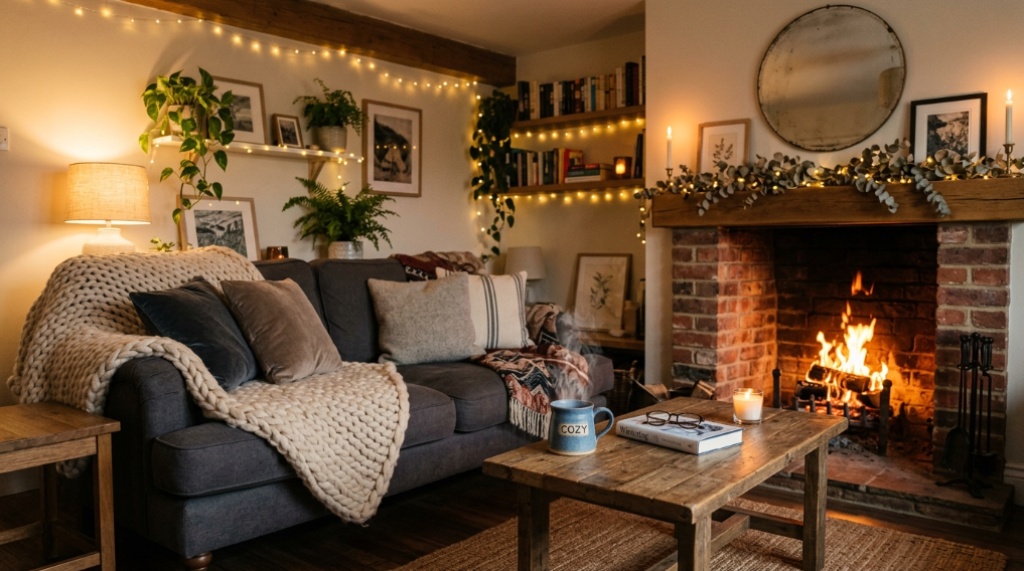
When the temperature drops, the living room often becomes the unofficial headquarters of the home. It’s where you retreat after work, where the family gathers on weekend mornings, and where you spend long evenings trying to ignore the wind outside. But if your space still feels like a summer showroom—cool leathers, bare floors, and crisp cotton—it can be hard to truly relax. One of the fastest ways to signal warmth and comfort is through texture, particularly by adding the softest velvet pillow covers available online. These simple accessories instantly soften hard edges, add visual depth, and make a sofa feel like a destination rather than just a piece of furniture.
Quick Answer
To create a cozy living room for cold weather, focus on layering textures, scents, and lighting rather than changing your entire furniture set. Start by swapping out smooth or cold materials (like cotton or leather) for plush ones like velvet, wool, and faux fur. Add warm-toned lighting at eye level, and introduce a throw blanket or rug to anchor the space. The goal is to engage the senses—sight, touch, and smell—to make the room feel like a warm hug.
Key Takeaways
- Texture Over Color: You don’t need to repaint the walls; simply swapping pillow covers to velvet or chenille changes the entire mood of a room more effectively than a fresh coat of paint.
- Layer Your Lighting: Cold weather means shorter days. Relying on one overhead light creates harsh shadows. Use at least three light sources at different heights (table lamps, floor lamps, candles) to warm the room.
- The Power of the “Third Layer”: A sofa usually looks cozy with a throw blanket and a mix of pillow sizes. Don’t just place two pillows; layer a large square behind a smaller rectangular lumbar pillow for a designer look.
- Scent is Part of Coziness: You can have the best visual setup, but a sterile smell will ruin the vibe. Use a simmer pot or a candle with notes of cedar, vanilla, or cinnamon to complete the atmosphere.
- Function Dictates Comfort: Ensure you have a place to set a mug of tea or hot chocolate. If you have to reach too far for a coaster, the room isn’t practically cozy.
Start with a Texture Audit (Not a Color Scheme)
Most guides tell you to pick a “winter color palette,” but colors are secondary to texture when it comes to physical comfort. A room painted in deep reds but filled with stiff, scratchy fabrics will still feel cold. Instead, do a texture audit of your current living room.
Run your hand along your sofa, armchairs, and cushions. If everything feels smooth, cool, or slippery, you have a “cold” room. To fix this, you need to introduce materials that trap air and reflect warmth back to your skin.
The Hierarchy of Cozy Fabrics
Not all soft fabrics are created equal. For cold-weather months, prioritize these materials:
- Velvet: This is the gold standard for winter. It has a dense pile that feels substantial. It also catches the light in a way that makes a room look immediately more expensive and moody.
- Chenille: Often softer than velvet but with a similar texture, chenille is great for those who want comfort but have pets or kids, as it tends to be more durable.
- Wool and Tweed: These are excellent for structural elements like throw blankets or accent chairs. They provide a rustic, cabin-like feel.
- Faux Fur: Use this sparingly. A single faux fur throw draped over the back of a chair adds a layer of luxury without making the room look like a cave.
The Pillow Swap Strategy
The easiest and most affordable way to change your room’s texture profile is by changing your pillow covers. You don’t need to buy new inserts; just store the summer covers and bring out the winter ones.
A practical tip: Size matters more than pattern in winter. A 22-inch velvet pillow cover feels much more substantial and cozy than a standard 18-inch one. Mix sizes—a large square velvet cover in the back, a medium-sized textured cover in the middle, and a small lumbar pillow in the front.

Why Lighting is Your Secret Weapon
In the winter, the sun sets early and the light that does come through is often gray and flat. Overhead lighting—especially cool-white LED bulbs—mimics the sterile light of a hospital or office, killing any cozy vibe instantly.
To create warmth, you need to lower the light source and warm the color temperature.
- Bulb Temperature: Look for bulbs in the 2700K to 3000K range. This is often labeled “soft white” or “warm white.” Avoid anything labeled “daylight” (5000K+).
- Layering: Turn off the overhead light entirely. Use a floor lamp in the corner to cast light upward, a table lamp next to the sofa for reading, and a small accent lamp on a bookshelf.
- Candles: Real candles or high-quality flameless ones add a flicker that overhead lights cannot replicate.
The “Floor” Problem: Rugs and Slippers
If you have hardwood or tile floors, your feet are the first thing to feel the cold. A cozy living room needs a soft landing. If you already have a rug, consider layering a smaller, thicker faux fur or sheepskin rug on top of it in the area where you sit most often.
This isn’t just a design choice; it’s a practical one. Cold floors pull heat from your body. A thick rug acts as insulation. For an extra layer of comfort, keep a basket of cozy socks or slippers near the entryway to the living room. It sounds simple, but cold feet will make even the most beautiful room feel uncomfortable.
Creating a “Nest” with Furniture Arrangement
Summer furniture arrangements are often spread out to maximize airflow. Winter arrangements should be pulled in tight to create a “conversation circle” or a “nest.”
If your sofa is pushed against a wall, pull it forward a few inches. If you have an armchair, angle it toward the center of the room rather than facing the TV or wall. This psychological shift creates a sense of enclosure. You want the space to feel like a cocoon, not an open hallway If you are looking to refresh your living space beyond just seasonal decor, you might also be interested to know that john lewis has entered the uk property market.
Addressing the “Cold Air” Drafts
You can decorate all you want, but if there is a physical draft hitting the back of your neck, you will never feel cozy. Before you buy a single pillow, check your windows and doors.
- Draft Stoppers: A simple fabric draft stopper at the bottom of a door can make a massive difference in perceived warmth.
- Curtains: Swap lightweight summer sheers for heavier, thermal-lined curtains. Closing them at dusk traps heat inside the room.
Practical Coziness: A Place for Everything
A truly cozy room is a functional one. If you have to get up constantly to find a coaster, blow out a candle, or fetch a blanket, the relaxation is broken.
Include a small side table next to every seating spot. It should be large enough to hold a mug of tea, a book, and a small plate. If you use throw blankets, store them in a woven basket or a dedicated ottoman so they are accessible but not cluttering the floor.
Frequently Asked Questions
What is the best fabric for winter pillow covers?
Velvet is generally considered the best fabric for winter pillow covers because of its dense, soft pile and ability to insulate. However, chenille, wool blends, and faux fur are also excellent choices for adding texture and warmth to a cold-weather living room.
How can I make my living room feel cozy without spending a lot of money?
Focus on what you already have. Rearrange your furniture to create a tighter seating circle, turn off overhead lights and use table lamps instead, and swap out your summer pillow covers for heavier winter ones. Adding a single textured throw blanket can also transform the look of a sofa.
Does lighting color really affect how cozy a room feels?
Yes, lighting color temperature has a significant impact on mood. Bulbs with a Kelvin rating between 2700K and 3000K emit a warm, amber glow that mimics firelight and sunset, which feels cozy. Bulbs rated 4000K or higher emit a blue-white light that feels clinical and cool.
Should I use a rug on top of carpet for winter?
Absolutely. Layering a smaller, textured rug (like a faux fur or shag rug) on top of a low-pile wall-to-wall carpet adds visual depth and extra softness underfoot. It also helps define the seating area and makes the space feel more intimate.
How do I keep a living room cozy if I have leather furniture?
Leather is naturally cool to the touch. To make a leather sofa cozy for winter, drape a large wool or chenille throw blanket over the seat and back. Add velvet or faux fur pillows to break up the smooth surface of the leather, and use a thick rug to warm the floor space around it.
Conclusion
Creating a cozy living room for cold-weather months isn’t about overhauling your interior design; it’s about engaging the senses. By focusing on soft textures like velvet, layering your lighting to eliminate harsh shadows, and ensuring your space is physically warm without drafts, you turn your living room into a genuine retreat. Start with the simple changes—swap your pillow covers, turn off the overhead light, and pull your seating closer together. You will likely find that you spend more time enjoying the space and less time worrying about the cold outside.