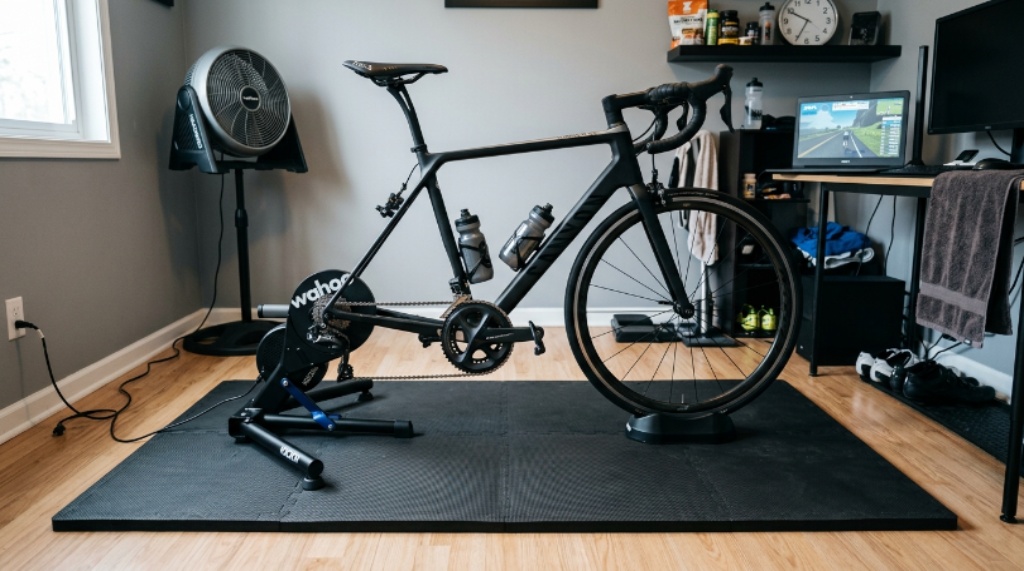
Setting up a home cycling space takes thought and effort. Most people focus on the bike or trainer first. However, one piece of equipment often gets overlooked until something goes wrong. That piece is the mat you place underneath your setup.
A good trainer mat protects your floor, absorbs vibration, and catches the sweat that pours off you during a hard session. Without one, you risk damaging expensive flooring, disturbing people in rooms below, and creating a slipping hazard over time.
The best part is that a quality mat does not have to cost a fortune. With the right knowledge, you can find an option that does everything you need at a price that fits your budget. This guide walks you through every factor worth considering so you can make a confident, informed choice.
Why a Bike Trainer Mat Is Not Optional
Some cyclists assume a towel or an old rug will do the job. It will not. A purpose-built trainer mat is designed to handle the specific demands of indoor cycling. A towel absorbs sweat but offers no vibration dampening and bunches up under the trainer legs. An old rug provides some cushioning but soaks up moisture, grows bacteria, and can slip on hard floors.
A dedicated mat solves all of these problems at once. It stays flat and firm under load. It resists moisture rather than absorbing it. It grips the floor firmly so nothing shifts mid-session. Additionally, the dense foam used in most trainer mats significantly reduces the vibration and noise that travel through your floor into the rooms below. If you live in a flat or have people living beneath you, this alone makes a mat essential.
Therefore, thinking of a mat as an optional extra is a mistake. It is a core part of any functional indoor cycling setup.
Understanding Mat Materials and What They Mean for You
Not all trainer mats are made from the same material, and the differences matter more than you might expect.
EVA Foam
EVA foam is the most common material used in affordable trainer mats. It is lightweight, easy to clean, and provides good vibration absorption. EVA mats are typically firm enough to support the weight of a bike and trainer without compressing too much underfoot. They are also resistant to moisture, which makes cleaning up sweat quick and straightforward.
The main limitation of EVA foam is durability under very heavy loads over long periods. However, for most home cyclists training on a standard direct-drive or wheel-on trainer, EVA foam holds up very well for several years with proper care.
High-Density Rubber
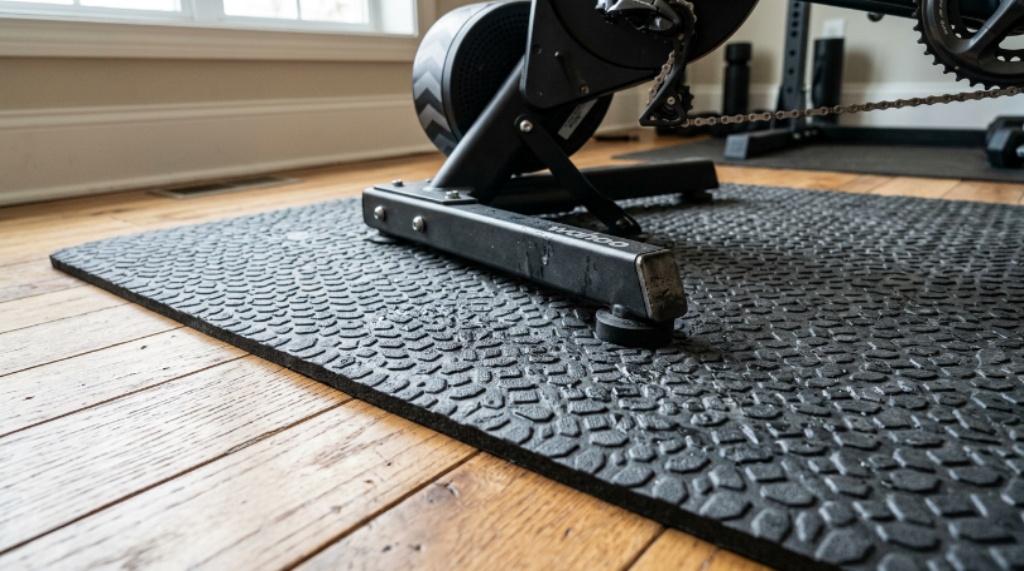
Rubber mats are heavier and more durable than EVA alternatives. They offer excellent grip on both hard floors and carpet, and they handle heavy trainers without showing signs of compression over time. Additionally, rubber provides superior noise and vibration dampening compared to standard EVA foam.
The trade-off is cost and weight. Rubber mats tend to be pricier and significantly heavier, which makes them harder to move and store. However, for cyclists who train daily and want the most durable long-term solution, rubber is worth the extra investment.
PVC and Composite Mats
Some budget mats are made from PVC or a composite blend of materials. These can work reasonably well at a low price point. However, they tend to be thinner than EVA or rubber alternatives, which reduces their effectiveness at absorbing vibration. They can also become slippery when wet and may release an unpleasant chemical smell when new. If you choose a PVC mat, allow it to air out thoroughly before use.
Getting the Size Right
Buying a mat that is too small is a common mistake. The mat needs to cover not just the footprint of your trainer but the entire area where sweat, water bottle drips, and foot placement are likely to occur.
Minimum Dimensions to Look For
For a standard wheel-on or direct-drive trainer, a mat measuring at least 90 centimetres wide and 180 centimetres long is a good starting point. This covers the trainer base, your bike, and a reasonable margin around the edges.
If you use a smart trainer with a wide base, or if you tend to stand on the mat to the side when clipping in and out, consider sizing up to 100 by 200 centimetres. The small difference in price between standard and large mats is rarely significant, but the added coverage makes a real practical difference.
Thickness and What It Affects
Thickness influences two key performance areas: vibration absorption and floor protection. Mats between 5 and 8 millimetres thick are the most common. They offer a good balance between cushioning and stability. Anything below 4 millimetres provides minimal vibration dampening. Anything above 10 millimetres can feel unstable under the narrow feet of some trainer designs.
For most home cyclists, a mat in the 6 to 8 millimetre range hits the sweet spot for both protection and stability.
Key Features That Separate a Good Mat from a Poor One
Price alone does not tell the whole story. A cheap mat can outperform a more expensive one if it has the right features. Knowing what to look for helps you spot genuine value.
Non-Slip Surface Texture
The underside of the mat must grip your floor firmly. Look for a textured or patterned underside designed to resist movement. Some mats include a ribbed pattern, others use a fine-grain texture. Either works well on hard floors like tile, wood, or laminate.
On carpet, most EVA and rubber mats grip naturally due to their weight and surface material. However, a textured underside still helps prevent gradual creep over time. Therefore, always check the product description for non-slip features before purchasing.
Moisture Resistance on the Top Surface
The top surface of your sweat protection mat needs to repel moisture rather than absorb it. A wipeable, closed-cell foam surface is ideal. Open-cell foam, while softer underfoot, traps moisture and becomes a breeding ground for bacteria and odour over time.
After each session, a quick wipe with a damp cloth should be enough to clean a good quality mat. If a product description mentions that it is machine washable, that may indicate the surface is more absorbent than ideal. Look for terms like water-resistant, wipe-clean, or closed-cell construction.
Rolled or Foldable Design
If storage space is limited, how a mat folds or rolls matters. Most EVA mats roll into a compact cylinder that can stand in a corner or slide under a bed. Rubber mats are heavier and less flexible, which makes them harder to store away after each use. If you plan to leave your setup in place permanently, this is less of a concern. However, if you need to clear the space regularly, a lightweight rollable mat is far more practical.
Where to Buy and What to Expect to Spend
You do not need to visit a specialist cycling store to find a great trainer floor mat. Several retail channels stock reliable options at competitive prices.
Online marketplaces like Amazon carry a wide range of mats from both cycling-specific brands and general fitness suppliers. Customer reviews are invaluable here. Look for mats with a high review count and consistent praise for durability, grip, and ease of cleaning. Pay attention to negative reviews mentioning smell, slipping, or premature compression, as these flag genuine quality issues.
Fitness equipment retailers, both online and in store, often stock mats alongside trainers and accessories. Buying from a cycling or fitness retailer gives you access to staff advice and, in some cases, the ability to feel the mat before purchasing.
In terms of price, a reliable EVA mat typically costs between $25 and $50. A high-density rubber mat sits between $50 and $90. Anything below $20 is likely to be too thin or too slippery to perform well under daily training conditions. Additionally, branded cycling-specific mats from companies like Wahoo or Tacx tend to be priced higher but include features like custom sizing for their trainer designs and refined surface textures.
Caring for Your Mat to Make It Last
A good mat lasts for years with minimal maintenance. Wipe the surface down with a damp cloth after every session to remove sweat and drips. Allow it to air dry fully before rolling or storing it away. Avoid folding it tightly, as sharp creases can crack the foam surface over time.
Once a week, clean the mat more thoroughly with a mild soap solution. This prevents odour and keeps the surface hygienic. Avoid bleach or solvent-based cleaners, as these can degrade the foam material and cause the surface to become brittle or discoloured.
Store the mat rolled rather than folded, and keep it away from direct sunlight when not in use. UV exposure causes EVA foam to become brittle and reduces its lifespan significantly.
Conclusion
Choosing an affordable bike trainer mat does not have to be complicated. The key is knowing which features actually matter and which are just marketing noise.
Focus on material, size, thickness, surface texture, and moisture resistance. EVA foam is the best all-round choice for most home cyclists, offering durability, easy maintenance, and good vibration absorption at a reasonable price. Make sure the mat is large enough to cover your full indoor cycling setup, thick enough to absorb vibration, and textured enough on the underside to stay firmly in place.
A purpose-built sweat protection mat and trainer floor mat keeps your floors safe, your sessions quieter, and your training space hygienic. With the guidance in this article, you have everything you need to find a mat that performs well, lasts long, and fits comfortably within your budget.
Frequently Asked Questions
Do I really need a special mat for my bike trainer, or can I use a yoga mat?
A yoga mat is too thin and too narrow for a bike trainer. It offers minimal vibration dampening and will not adequately protect your floor from the weight and pressure of a trainer. A purpose-built trainer mat is specifically designed to handle the load, sweat, and vibration of indoor cycling sessions.
What thickness should a bike trainer mat be?
For most home cyclists, a thickness of 6 to 8 millimetres offers the best balance of cushioning and stability. Mats below 4 millimetres provide little vibration dampening. Mats above 10 millimetres can feel unstable under the narrow contact points of some trainer legs.
Will a trainer mat damage my hardwood floor?
A quality mat with a non-slip textured underside will not damage hardwood floors. In fact, it protects them from scratches, compression marks, and sweat moisture. Avoid dragging the mat across the floor when repositioning it, as this can cause minor surface scuffs on some finishes.
How do I stop my trainer mat from sliding on a hard floor?
Choose a mat with a ribbed or textured underside designed specifically to grip hard surfaces. If your mat continues to slide, a thin non-slip rug underlay placed beneath it provides additional friction. Some cyclists also use a small amount of non-slip furniture gripper tape on the underside corners for extra security.
How long does a bike trainer mat typically last?
A quality EVA foam mat used daily typically lasts between three and five years before showing signs of compression or surface wear. Rubber mats can last significantly longer. Proper care, including regular cleaning and correct storage, extends the lifespan of any mat considerably.