Most bike thefts don’t happen because a thief is unusually skilled. They happen because the bike was unusually easy to take. A lock left at home, a frame secured to nothing, a quick-release wheel left unprotected — these small oversights turn a bike into a target in seconds. If you’re wondering how thieves actually choose their victims, or whether your own locking habits are putting you at risk, check this out for a closer look at the kind of lock setup that changes the equation. This article breaks down exactly what makes a bike vulnerable and what you can do about it.
Quick Answer
A bike becomes an easy target when the effort required to steal it is lower than the reward. Thieves look for weak or missing locks, unattended bikes in predictable locations, quick-release parts that can be stripped in seconds, and frames left unlocked to fixed objects. The type of lock, how it’s used, and where the bike is parked usually matter more than the bike’s price.
Key Takeaways
- Thieves weigh effort versus reward — anything that slows them down or draws attention makes a bike less attractive.
- How and where you lock your bike often matters more than the lock’s price tag.
- Quick-release wheels, seats, and accessories are common targets even when the frame is locked.
- Predictable parking spots and overnight outdoor storage dramatically increase theft risk.
- Layering security — a good lock plus smart habits — is more effective than relying on any single measure.
How Thieves Actually Choose a Target
Bike theft is rarely random. Most thieves work quickly, often in daylight, and they pick bikes that minimize their risk of being noticed or caught. They’re not evaluating your bike’s sentimental value — they’re evaluating how fast they can take it and how likely they are to get away with it.
That calculation comes down to three factors: effort (how hard is the lock to defeat?), time (how long will it take?), and exposure (how visible is the theft?). A bike that scores poorly on any of these is a candidate. A bike that scores poorly on all three might as well have a “steal me” sign on it.
Effort: The Lock and How It’s Used
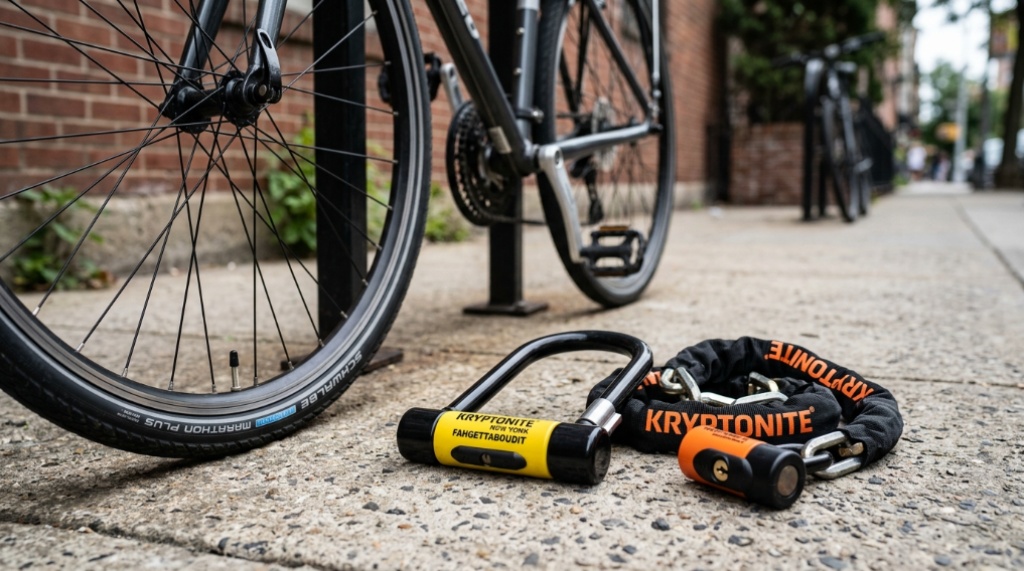
A cheap cable lock can be cut with basic hand tools in seconds. A sturdy U-lock requires an angle grinder, which is loud, slow, and attention-grabbing. Thieves know the difference, and many won’t bother with a well-secured bike when an easier one is parked nearby.
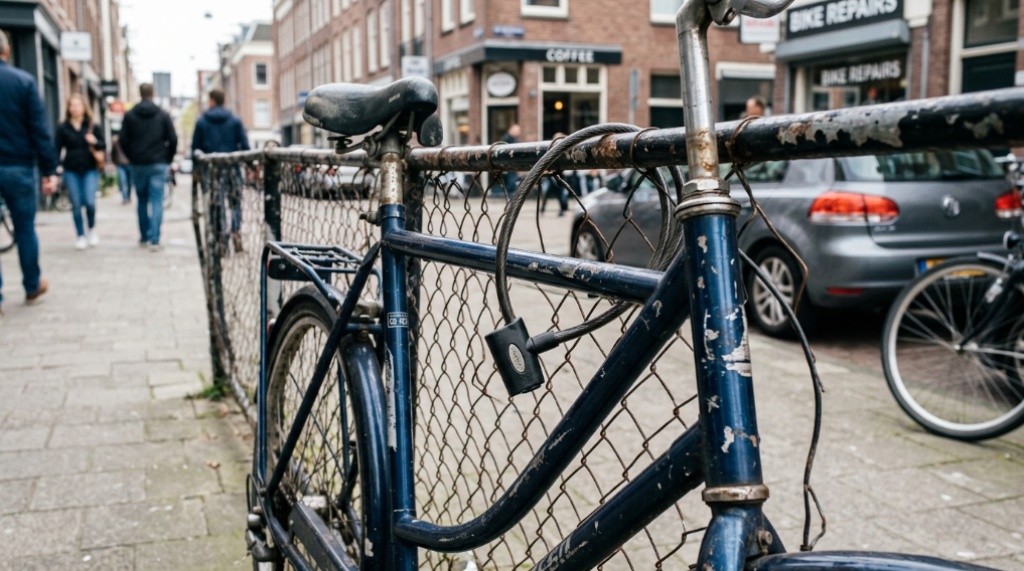
But the lock itself is only half the story. A high-quality U-lock that’s looped around a wheel instead of the frame, or locked to a rack that can be unbolted, is barely better than no lock at all. The lock only works if it connects your frame (and ideally a wheel) to something genuinely immovable.
Time: How Long the Theft Takes
Every additional second a thief spends working on a lock increases the chance someone notices. That’s why complex locking setups — multiple locks, cables through wheels, locks threaded through the frame and both wheels — are so effective. They don’t make theft impossible; they make it slow and awkward.
Exposure: Where and When You Park
A bike locked in a busy, well-lit area with foot traffic is far less appealing than one left in a dim alley or behind a building overnight. Thieves prefer cover: low visibility, few witnesses, and predictable schedules. If your bike sits in the same spot at the same time every day, that pattern itself becomes a vulnerability, If you prefer cycling indoors during high-risk seasons, check out this guide on how to choose an affordable bike trainer mat for home cycling workouts.
The Most Common Vulnerabilities Thieves Exploit
Understanding the specific weak points helps you fix them. Here are the ones that show up again and again:
- Locking only the wheel: The frame can be lifted off and carried away, leaving the wheel behind.
- Locking to a weak object: A thin signpost, a wooden fence, or a rack that can be unbolted offers little resistance.
- Quick-release components: Wheels, seats, and seat posts with quick-release levers can be removed in seconds and sold separately.
- Cable locks used alone: Convenient but easy to cut; fine as a secondary layer, risky as your only defense.
- Leaving accessories attached: Lights, bags, computers, and pumps disappear quickly, even from locked bikes.
- Parking in isolated or predictable spots: The same location at the same time every day gives thieves a reliable window.
- Home storage in shared or unsecured areas: A garage, balcony, or hallway that isn’t locked is an easy target.
Lock Type and Locking Method: Which Matters More?
Both matter, but if you had to pick one to improve, it’s usually how you lock. A mediocre lock used correctly will outperform a premium lock used carelessly. That said, the wrong lock type can undermine even good technique.
| Lock Type | Resistance to Attack | Best Use | Main Weakness |
|---|---|---|---|
| Cable lock | Low | Quick stops, secondary security | Cut easily with hand tools |
| Chain lock | Medium to high | Urban parking, longer stops | Heavy and bulky to carry |
| U-lock (standard) | Medium to high | Everyday locking to racks | Limited reach; needs a good anchor |
| Folding lock | Medium | Convenience with decent security | Hinges can be targeted |
The practical takeaway: a U-lock or quality chain lock used properly is the foundation. Cable locks are best treated as an add-on to secure wheels or accessories, not as your primary defense.
Location, Timing, and Routine: The Overlooked Factors
Two bikes with identical locks can have very different theft risks depending on where and when they’re parked. A bike locked outside a busy café at noon is a much harder target than the same bike left overnight in a stairwell.
Thieves also exploit routine. If you lock up in the same spot at the same time every weekday, that predictability makes you easier to plan around. Varying your parking location, even slightly, reduces that risk. At home, storing your bike inside — or in a locked, private space — removes the overnight window entirely.
What About GPS Trackers and Alarms?
Trackers and alarms can help recovery and deter some thieves, but they’re not a substitute for a solid lock. An alarm may draw attention, and a tracker may help you locate a stolen bike, but neither prevents the theft in the first place. Treat them as backups, not primary security.
What Actually Reduces Your Risk
Improving your security doesn’t require spending a fortune. It requires closing the gaps thieves look for:
- Use a quality U-lock or chain lock as your main lock.
- Lock the frame and at least one wheel to a fixed, immovable object.
- Use a secondary cable to secure the second wheel and quick-release parts.
- Remove lights, bags, and accessories when you leave the bike.
- Park in visible, well-lit, high-traffic areas when possible.
- Vary your parking routine and avoid leaving a bike outside overnight.
- Store your bike indoors or in a locked space at home.
None of these steps is complicated, but together they shift your bike from “easy target” to “not worth the trouble” in the eyes of most thieves.
Frequently Asked Questions
Are expensive bikes more likely to be stolen?
Not necessarily more likely, but they’re often more attractive when the opportunity is easy. Thieves generally target the easiest bike available, regardless of price. A cheap bike left unlocked is a better target than an expensive bike locked properly.
How long does it take to cut a cable lock?
Basic cable locks can be cut with hand tools in a matter of seconds. That speed is exactly why they’re poor primary locks in high-theft areas.
Is it better to lock my bike to a rack or a pole?
Either works if the object is genuinely immovable and secure. Avoid thin signposts, wooden fences, and racks that can be unbolted or lifted over.
Do I need to lock both wheels?
Ideally, yes — at least the rear wheel, which is typically more expensive to replace. A secondary cable through the front wheel adds protection with minimal effort.
Can a bike be stolen even with a good lock?
Yes. No lock is unbeatable. The goal is to make your bike harder to steal than nearby alternatives, which significantly reduces the odds.
Does parking in the same place every day increase risk?
It can. Predictable locations and schedules give thieves a reliable window. Varying your spot and timing reduces that exposure.
Conclusion
A bike becomes an easy target when the effort, time, and exposure of stealing it are all low. Fixing that means using a strong lock correctly, securing wheels and components, and being deliberate about where and when you park. You don’t need the most expensive gear — you need to close the obvious gaps thieves rely on. Start with your lock setup and parking habits, and your bike moves out of the easy-target category.