Most people think they sleep enough. But they still wake up tired, unfocused, and slow. The missing piece is not total sleep time. It is deep sleep.
Deep sleep is when your brain repairs itself, your body releases growth hormone, and your immune system resets. Without it, productivity drops, stress increases, and long-term health suffers.
The problem is modern routines quietly destroy deep sleep. Late-night screens, irregular schedules, stress, caffeine, and artificial lighting all interfere with the brain’s recovery cycle.
The good news is this: deep sleep can be improved quickly using simple behavioral changes backed by sleep science. You do not need supplements or medication to start seeing results.
This guide explains exactly how to increase deep sleep naturally using practical, research-supported strategies that work in real life.
What Is Deep Sleep and Why Does It Matter So Much?
Snippet Answer: Deep sleep is the slow-wave stage of sleep when the brain clears toxins, repairs tissue, strengthens memory, balances hormones, and restores energy. Adults typically need 1.5–2 hours nightly. Improving deep sleep boosts immunity, focus, mood stability, metabolism, and long-term brain health.
Deep sleep is also called slow-wave sleep (SWS). It is the most physically restorative stage of sleep.
During this phase, your brain produces delta waves. Heart rate slows. Breathing stabilizes. Muscles recover. Growth hormone increases.
This stage supports:
- Memory consolidation
- Immune repair
- Hormone regulation
- Muscle recovery
- Brain detoxification
The brain’s glymphatic system becomes highly active during deep sleep. It removes metabolic waste linked to neurological decline.
Adults usually spend 13–23% of total sleep time in deep sleep. That equals roughly 90–120 minutes nightly.
Less than this range leads to daytime fatigue even if total sleep time looks normal.
More deep sleep means fewer awakenings, faster recovery, sharper thinking, and better emotional regulation.
Why Are You Not Getting Enough Deep Sleep?
Answer Block: Most deep sleep loss comes from irregular schedules, late-night screen exposure, caffeine intake after midday, stress hormones, warm bedrooms, alcohol consumption, and reduced daylight exposure. These disrupt circadian rhythm timing and prevent the brain from entering slow-wave sleep efficiently.
Deep sleep depends heavily on circadian rhythm stability.
Your brain schedules deep sleep early in the night. When sleep timing shifts, deep sleep shrinks first.
Common disruptors include:
- Sleeping after midnight regularly
- Using phones before bed
- Late caffeine consumption
- Stress and anxiety
- Warm sleeping environments
- Alcohol before bedtime
- Low daytime sunlight exposure
Even one of these can reduce slow-wave sleep significantly.
Combined together, they create chronic sleep debt that reduces recovery capacity and weakens immune performance.
Fixing these habits often increases deep sleep within one week.
How Does a Consistent Sleep Schedule Increase Deep Sleep?
Answer Block: A fixed sleep schedule strengthens circadian rhythm timing, allowing the brain to predict when recovery should begin. This increases melatonin release earlier at night and extends slow-wave sleep duration, especially during the first sleep cycle when deep sleep is most concentrated.
Your brain follows a biological clock controlled by light exposure and routine.
When sleep timing changes daily, the brain delays recovery phases.
Consistency trains the brain to enter deep sleep faster.
Follow these scheduling rules:
- Sleep within the same 30-minute window nightly
- Wake up at the same time every day
- Avoid weekend sleep shifts
- Stop naps after 3 PM
Deep sleep improves when the brain trusts your schedule.
People who maintain fixed sleep timing experience stronger hormone regulation and improved next-day alertness.
Can Light Exposure Improve Deep Sleep Quality?
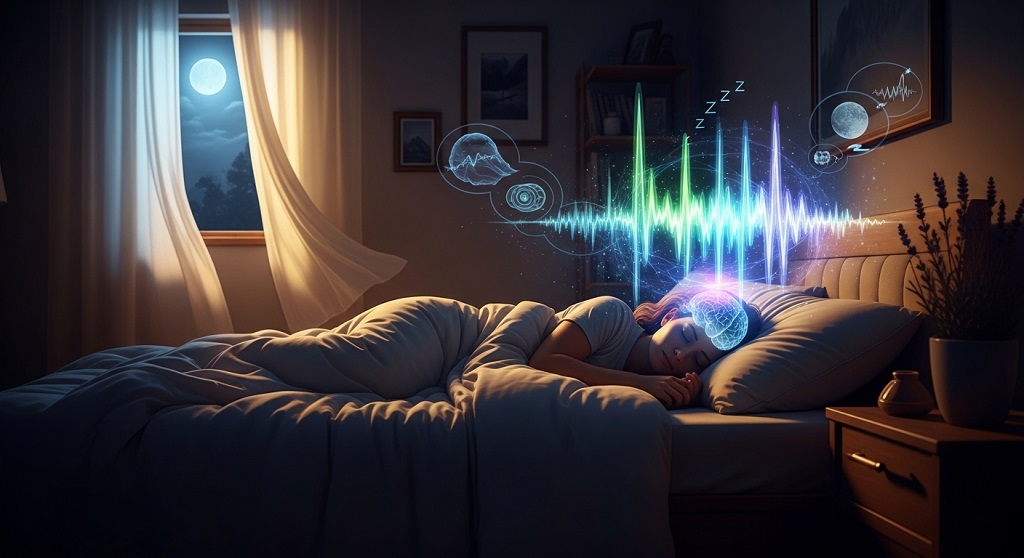
Answer Block: Morning sunlight strengthens circadian rhythm signals that control nighttime melatonin production. Bright daylight exposure early in the day increases deep sleep duration later at night, while artificial blue light exposure after sunset suppresses recovery hormones and delays slow-wave sleep onset.
Light controls your internal clock more than any other factor.
Morning sunlight signals the brain to start a biological countdown toward nighttime recovery.
Even 15 minutes of outdoor light exposure improves sleep timing.
Nighttime light does the opposite.
Blue wavelengths from phones suppress melatonin production by up to 50%.
To optimize light exposure:
- Get sunlight within 60 minutes of waking
- Reduce screen brightness after sunset
- Use warm indoor lighting at night
- Avoid overhead LED lighting before bed
These small adjustments increase deep sleep consistency within days.
Does Room Temperature Affect Deep Sleep Duration?
Answer Block: Cooler bedroom temperatures help the body lower its core temperature, which is required for slow-wave sleep initiation. The ideal range is 16–19°C (60–67°F). Warmer rooms interfere with melatonin release and reduce deep sleep efficiency across the first half of the night.
Your body naturally cools before entering deep sleep.
If the environment stays warm, the transition slows down.
This leads to lighter sleep cycles and more awakenings.
| Bedroom Condition | Effect on Deep Sleep | Recommended Adjustment |
|---|---|---|
| Warm temperature (above 24°C) | Reduces slow-wave sleep | Use fan or ventilation |
| Cool temperature (16–19°C) | Supports deep sleep onset | Optimal environment |
| Heavy blankets | Overheating risk | Switch to breathable fabric |
| Poor airflow | Sleep fragmentation | Improve ventilation |
Even small cooling adjustments improve sleep depth significantly.
How Does Exercise Help You Get More Deep Sleep?
Answer Block: Moderate daytime exercise increases sleep pressure by raising adenosine levels in the brain. This accelerates entry into slow-wave sleep and increases its duration. Strength training and aerobic workouts earlier in the day produce the strongest improvements in deep sleep quality.
Physical activity signals the brain that recovery is needed.
This increases slow-wave sleep intensity during the first sleep cycle.
Exercise also reduces cortisol levels at night.
Best exercise timing includes:
- Morning resistance training
- Afternoon walking
- Early evening cardio
Avoid intense workouts within two hours of bedtime.
Late exercise can temporarily increase alertness.
Regular movement improves sleep depth more than occasional intense workouts.
Can Caffeine and Alcohol Reduce Deep Sleep?
Answer Block: Caffeine blocks adenosine receptors that signal sleep pressure, delaying slow-wave sleep onset. Alcohol initially causes drowsiness but fragments sleep cycles later in the night. Both substances reduce deep sleep duration when consumed within six hours of bedtime.
Caffeine stays in the bloodstream longer than most people expect.
Its half-life ranges from 5 to 8 hours.
That afternoon coffee may still affect midnight recovery.
Alcohol creates another problem.
It shortens REM sleep and disrupts slow-wave sleep later in the night.
For better deep sleep:
- Stop caffeine after 2 PM
- Avoid energy drinks entirely
- Limit alcohol within 4 hours of sleep
- Replace late beverages with herbal tea
Removing late caffeine alone can increase deep sleep by measurable margins.
Does Stress Prevent the Brain from Entering Deep Sleep?
Answer Block: Elevated cortisol levels delay the brain’s transition into slow-wave sleep by maintaining alertness signals. Chronic stress keeps the nervous system in a semi-awake state overnight, reducing deep sleep duration and increasing nighttime awakenings. Relaxation routines restore recovery-friendly hormone balance.
Stress keeps the nervous system activated even after bedtime.
This prevents full entry into deep sleep cycles.
Reducing stress before bed improves recovery immediately.
Effective nighttime calming strategies include:
- Breathing exercises
- Journaling
- Stretching routines
- Reading physical books
These activities reduce cortisol and increase melatonin release.
A calm nervous system allows deeper recovery cycles.
Can a Night Routine Increase Deep Sleep Naturally?
Answer Block: A predictable nighttime routine signals the brain to begin melatonin production earlier. Repeating the same sequence nightly improves sleep onset timing and increases slow-wave sleep stability. Even a 20-minute routine strengthens deep sleep consistency across the week.
Your brain learns patterns quickly.
A consistent pre-sleep routine acts like a trigger for recovery mode.
Effective routines include:
- Dimming lights 60 minutes before bed
- Avoiding screens
- Stretching lightly
- Reading quietly
- Preparing tomorrow’s schedule
Consistency matters more than complexity.
A simple routine repeated nightly produces measurable improvements.
Conclusion: The Simple Formula for Getting More Deep Sleep Every Night
Deep sleep improves when your brain feels safe, predictable, and aligned with natural circadian signals.
The most effective strategy is combining consistent sleep timing, daylight exposure, reduced nighttime stimulation, cooler sleeping environments, and regular physical movement.
You do not need expensive devices or supplements.
You need rhythm.
Start with three changes tonight: sleep at the same time, reduce screens after sunset, and cool your bedroom slightly.
Within one week, most people notice deeper rest and clearer mornings.
If you apply all eight strategies from this guide consistently, your recovery system becomes stronger, your focus improves, and your energy stabilizes throughout the day.
Choose one habit today and make it automatic. Deep sleep improves step by step.
Frequently Asked Questions
How much deep sleep should adults get each night?
Most adults need 90–120 minutes of deep sleep nightly. This equals about 13–23% of total sleep time. Less than this range often leads to fatigue even if total sleep duration appears sufficient.
Is deep sleep more important than REM sleep?
Both stages are essential but serve different functions. Deep sleep supports physical recovery and immune repair, while REM sleep supports emotional regulation and memory processing. Balanced cycles are necessary for overall health.
Does age reduce deep sleep naturally?
Yes. Deep sleep gradually declines with age due to changes in brain activity patterns. However, lifestyle adjustments like exercise, consistent sleep timing, and light exposure can significantly improve slow-wave sleep at any age.
Can naps replace deep sleep at night?
No. Short daytime naps improve alertness but rarely include slow-wave sleep. Nighttime sleep remains the primary source of deep recovery cycles needed for hormonal balance and brain detoxification.
Do sleep trackers measure deep sleep accurately?
Most wearable trackers estimate deep sleep using movement and heart-rate variability. They provide useful trends but are less accurate than laboratory sleep studies using brainwave monitoring.
Does magnesium improve deep sleep?
Magnesium may support relaxation and nervous system regulation, which indirectly improves sleep quality. However, behavioral strategies like schedule consistency and light exposure produce stronger long-term improvements.
How quickly can deep sleep improve after lifestyle changes?
Many people notice improvements within three to seven days after stabilizing sleep timing, reducing evening screen exposure, and improving bedroom temperature. Long-term consistency produces the largest benefits.
Read More Also: How to Reduce Back Pain at Work Using the Right Office Chair
Learn More: Does Cold Green Tea Have the Same Benefits?