Swollen legs are more common than most people think. After a long day on your feet, a flight, or even just sitting at a desk for hours, your legs can feel heavy, tight, and uncomfortable. The good news is that simple changes to how you position your body can bring real relief — often without any medication at all.
This article explains why leg swelling happens, how body positioning affects it, and what you can do at home to feel better. You will also find tips on the best ways to sleep and rest to keep swelling from coming back.
Why Legs Swell in the First Place
Your body constantly moves fluid through a network of blood vessels and lymphatic channels. When you sit or stand for long periods, gravity pulls fluid downward. That fluid collects in the lower legs, ankles, and feet. The result is that familiar puffy, heavy feeling.
Several things can make this worse. Heat, poor circulation, pregnancy, a sedentary lifestyle, and certain medications all play a role. Additionally, eating too much salt causes your body to retain water, which adds to the problem.
In most cases, mild swelling is harmless. However, if swelling is sudden, affects only one leg, or comes with pain, redness, or shortness of breath, you should see a doctor right away. Those signs can point to a blood clot or another serious condition.
For everyday swelling, though, the fix is often straightforward. Position matters more than most people realize.
How Body Positioning Affects Fluid in Your Legs
When you lie flat, gravity no longer pulls fluid toward your feet. Your body can redistribute that fluid more evenly. However, lying flat is not always the most effective option. Raising your legs above the level of your heart gives gravity a helpful push in the right direction.
This is the core idea behind leg elevation. When your legs are higher than your heart, fluid drains away from the lower limbs and back toward the body’s core. Circulation improves. Swelling goes down. The relief is often noticeable within 20 to 30 minutes.
Therefore, learning to elevate legs correctly is one of the most valuable tools you can use at home for swelling relief.
The Right Way to Elevate Your Legs
Many people prop their feet on a pillow and call it done. That helps, but there is a better approach.
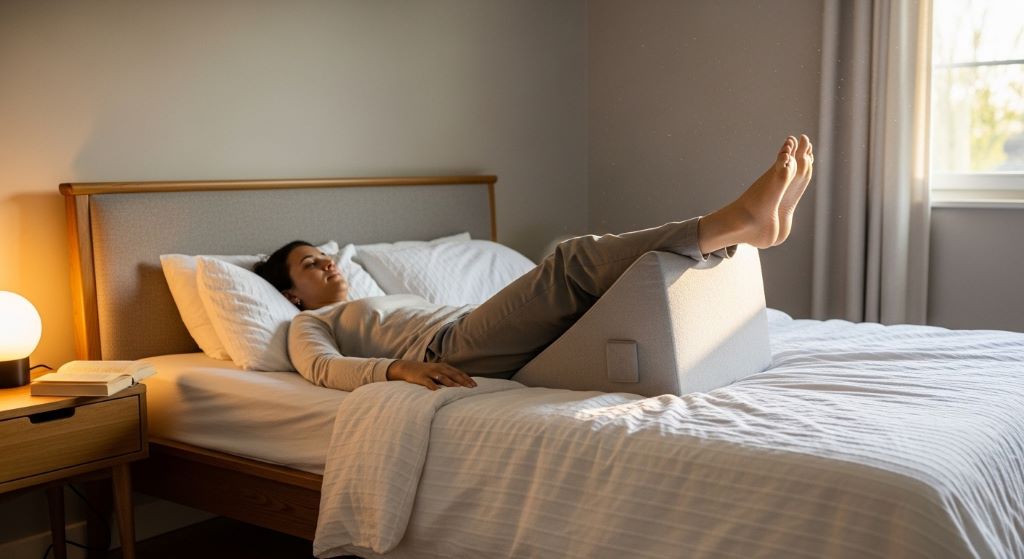
To elevate legs correctly, your feet should be raised at least six to twelve inches above your heart. This means your legs need to be at a meaningful angle, not just slightly tilted. A single flat pillow under your ankles often does not create enough elevation to move fluid effectively.
Here is how to do it properly:
- Lie flat on your back on a bed or firm couch.
- Stack two to three firm pillows under your calves and ankles, not just your heels.
- Make sure your entire lower leg is supported, not just the ankle. Supporting only the heel can put pressure on the Achilles tendon and cause discomfort.
- Your knees should be slightly bent, not locked straight.
- Stay in this position for at least 20 minutes for meaningful fluid movement.
You can also use a foam wedge pillow designed specifically for leg elevation. These are available online and in many pharmacies. They provide a consistent angle and are gentler on the joints than stacked pillows.
How Often Should You Elevate Your Legs?
Once a day is better than nothing. However, for people who deal with regular swelling, two to three sessions per day works best. Morning and evening are ideal times. A session before bed is especially helpful because it prepares your legs for the night ahead.
Each session should last between 15 and 30 minutes. During that time, try to relax fully. Deep breathing also helps, as it supports the lymphatic system and encourages fluid movement throughout the body.
If your job keeps you on your feet or seated all day, try to take short breaks. Even five minutes of lying with your legs raised during a lunch break can make a difference.
Sleep Posture and Leg Swelling
How you sleep matters just as much as your daytime habits. When you spend seven or eight hours in the wrong position, fluid can pool in your legs all over again — even after a good elevation session.
Applying the right sleep posture tips can help you wake up with less swelling and more comfort. The goal is to keep your legs slightly elevated while still getting restful sleep.
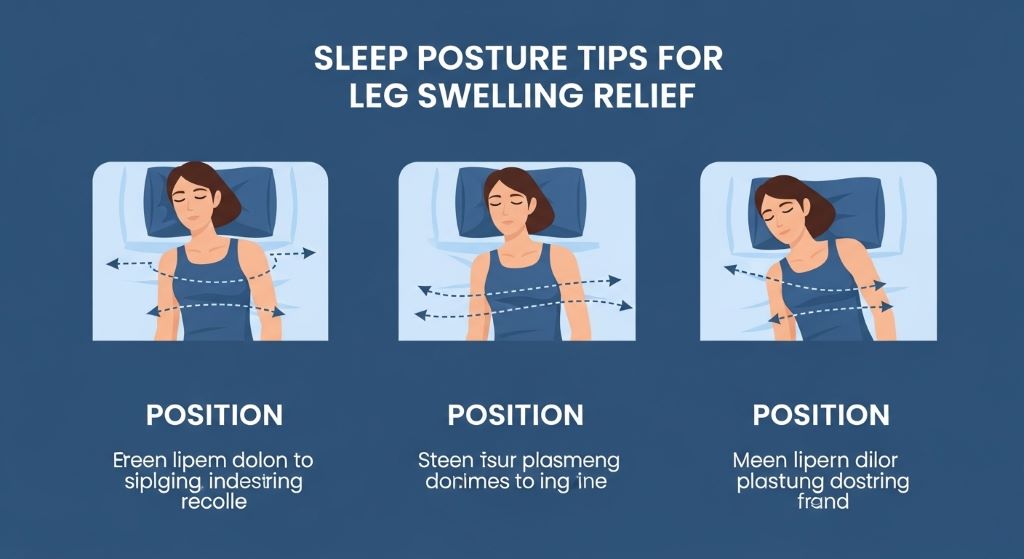
Here are the most effective sleep posture tips for reducing leg swelling:
- Sleep on your back with a wedge pillow or two firm pillows under your lower legs.
- If you prefer sleeping on your side, place a pillow between your knees. This aligns your hips and reduces pressure on your lower body.
- Avoid sleeping on your stomach. This position flattens the natural curve of your spine and increases pressure on the veins in your legs.
- Keep your bedroom cool. Heat causes blood vessels to expand, which can worsen swelling overnight.
- Wear loose, comfortable clothing to bed. Tight waistbands or compression around the hips can restrict circulation.
Many people find that back sleeping with elevated legs takes some getting used to. Start by sleeping on your back for the first hour or two, then switch to your preferred side if needed. Over time, it becomes more comfortable.
Pillows, Wedges, and Support Tools
The right tools make elevation easier and more consistent. Here is a look at the most practical options:
Wedge pillows are the most effective choice for sustained elevation. They are firm, maintain their shape through the night, and provide a steady angle. Look for one that elevates your legs at a 20 to 30-degree angle.
Standard bed pillows work in a pinch, but they tend to flatten during the night. If you use pillows, stack two or three and check the position before you fall asleep.
Adjustable bed bases allow you to raise the foot of the bed electronically. This is a premium option, but it is worth considering if leg swelling is a chronic issue.
Compression socks pair well with elevation. Worn during the day, they apply gentle pressure to the legs, which pushes fluid upward and prevents it from pooling. Remove them before sleeping unless your doctor advises otherwise.
Simple Lifestyle Habits That Support Swelling Relief
Positioning is the most direct tool, but it works best alongside healthy daily habits. These changes do not require expensive equipment or a lot of effort.
Move more throughout the day. Even a short walk after meals helps your calf muscles pump blood back toward the heart. The calf muscles act as a second heart for your lower body, and they need movement to do their job.
Reduce your salt intake. Sodium causes your body to hold onto water. Cutting back on processed foods, sauces, and salty snacks can reduce overall fluid retention.
Drink more water. It sounds counterintuitive, but staying hydrated actually helps your body release excess fluid. When you are dehydrated, your body holds onto water as a protective response.
Avoid sitting or standing in one position for too long. If your job requires long periods of sitting, set a timer to remind yourself to stand and walk for a few minutes every hour.
Keep your feet moving when seated. Rolling your ankles, flexing your toes, and doing calf raises in your chair all help keep fluid moving.
When to See a Doctor
Home remedies are effective for mild, everyday swelling. However, some situations call for professional attention.
See a doctor if your swelling does not improve after a few days of consistent home care. Also seek help if the swelling is in only one leg, as this can indicate a deep vein thrombosis. Swelling accompanied by pain, warmth, or redness in the leg is another warning sign.
If you have an underlying health condition such as heart disease, kidney problems, or lymphedema, talk to your doctor before making changes to your routine. They can guide you on the safest and most effective approach for your specific situation.
Creating a Simple Daily Routine for Swelling Relief
The best results come from consistency. A daily routine does not have to be complicated. Here is an example of what a simple swelling-relief day might look like:
In the morning, start with a short walk — even ten minutes helps. Drink a full glass of water before breakfast. Wear compression socks if you have them.
During the day, take movement breaks every hour. Keep a bottle of water nearby. Avoid salty snacks.
In the evening, do a 20-minute leg elevation session while reading, watching television, or resting. Follow the posture guidelines above to elevate legs correctly and get the most benefit from each session.
At bedtime, position pillows under your lower legs or use a wedge. Wear loose clothing. Keep the room cool and aim for seven to eight hours of sleep.
Over time, this routine becomes second nature. The swelling episodes become less frequent. Your legs feel lighter, and your overall comfort improves.
Special Situations: Pregnancy, Travel, and Prolonged Sitting
Some situations make leg swelling more likely. Knowing how to handle them in advance helps you stay ahead of the problem.
During pregnancy, swelling in the legs and feet is very common, especially in the third trimester. Elevating the legs for short sessions throughout the day helps. Sleeping on the left side is also recommended by many healthcare providers, as it reduces pressure on the vena cava — the large vein that carries blood from the lower body back to the heart.
During long flights or road trips, try to move as much as possible. Walk the aisle when it is safe. Flex your ankles and calves while seated. Wear compression socks for flights longer than four hours. Drink water and skip the alcohol, which dehydrates the body.
If your job requires prolonged sitting, a footrest can help you maintain a slightly elevated leg position throughout the workday. Even a small angle makes a difference over eight hours.
Conclusion
Leg swelling at home can often be managed with simple, consistent habits. The most effective approach centers on proper positioning. Learning to elevate legs correctly — with your feet raised well above your heart and your full calf supported — can produce noticeable relief in as little as 20 minutes.
Applying smart sleep posture tips, such as back sleeping with leg support or side sleeping with a pillow between your knees, helps prevent fluid from building up overnight. Pairing these habits with regular movement, good hydration, reduced salt intake, and compression socks creates a powerful daily routine.
Most mild swelling responds well to these strategies. With a little consistency, you can reduce discomfort, improve circulation, and enjoy lighter, healthier legs each day.
Frequently Asked Questions
How long should I elevate my legs to reduce swelling?
Most people see relief after 15 to 30 minutes of proper leg elevation. For best results, aim for two to three sessions per day, especially in the morning and before bed.
Is it safe to sleep with my legs elevated every night?
Yes, for most healthy adults it is safe and beneficial. If you have a medical condition affecting circulation or your spine, check with your doctor first to make sure it is appropriate for your situation.
What is the best angle for elevating legs to reduce swelling?
A 20 to 30-degree angle, with your feet raised six to twelve inches above your heart, is generally recommended. A wedge pillow is the easiest way to maintain this angle consistently.
Can the wrong sleep position make leg swelling worse?
Yes. Sleeping on your stomach increases pressure on your lower body and can restrict blood flow. Sleeping flat without any leg support also allows fluid to remain in the legs rather than draining overnight.
Do compression socks help with leg swelling, and when should I wear them?
Compression socks are very effective for preventing and reducing leg swelling. Wear them during the day, especially if you stand or sit for long periods. Remove them before sleep unless your doctor advises otherwise.
Related Topics:
How to Get More Deep Sleep Every Night Naturally
How to Manage Lower Back Pain at Home Without Medicine