Many Americans ask the same question: when is the best time to exercise? The answer depends on your goals, body clock, lifestyle, and consistency. Research shows that nearly 75% of adults in the United States struggle to maintain regular exercise habits due to scheduling conflicts and energy fluctuations. Meanwhile, studies published by health organizations indicate that consistent exercise timing can improve workout adherence by up to 40%.
Understanding the best time to work out can help you maximize energy, improve performance, and maintain long term fitness success. Whether you prefer morning runs, lunchtime walks, or evening strength sessions, choosing the right exercise schedule matters. This guide explores scientific findings, practical strategies, and personalized approaches to help you determine your ideal workout time.
Why Exercise Timing Matters
Your body follows a natural internal clock known as the circadian rhythm. This biological system regulates energy levels, hormone production, body temperature, and sleep cycles. Consequently, these factors influence physical performance throughout the day.
Researchers have found that workout timing affects muscle strength, endurance, metabolism, and recovery rates. However, consistency often produces better long term results than chasing the theoretically perfect hour.
Additionally, your work schedule, family responsibilities, and personal preferences influence your ability to maintain an exercise routine. Therefore, the best time to exercise remains the time you can sustain consistently.

Is Morning the Best Time to Exercise?
Morning workouts remain popular throughout the USA because they create structure and reduce scheduling conflicts. Many people also report improved focus and productivity after early exercise sessions.
Exercise specialists suggest that morning activity can increase alertness and encourage healthier daily choices. Furthermore, regular morning exercise often improves routine adherence over time.
Individuals with physical limitations can also benefit from structured routines through programs like arm only workout plans designed for adaptive fitness goals.
Benefits of Morning Exercise
- Creates a consistent daily habit
- Reduces evening scheduling conflicts
- May improve mental focus
- Supports healthy sleep patterns
- Encourages healthier lifestyle choices
Potential Drawbacks of Morning Exercise
- Body temperature remains lower after waking
- Muscles may require longer warmups
- Strength performance can feel reduced
- Early schedules may affect sleep quality
If you choose morning workouts, spend at least ten minutes warming up before beginning intense activity.
Can Afternoon Workouts Improve Performance?
Many exercise physiologists consider afternoon workouts ideal for athletic performance. During this period, body temperature typically reaches optimal levels for physical activity.
Research suggests that muscle strength, flexibility, reaction time, and cardiovascular efficiency often peak during afternoon hours. Consequently, athletes frequently schedule intensive training sessions during this period.
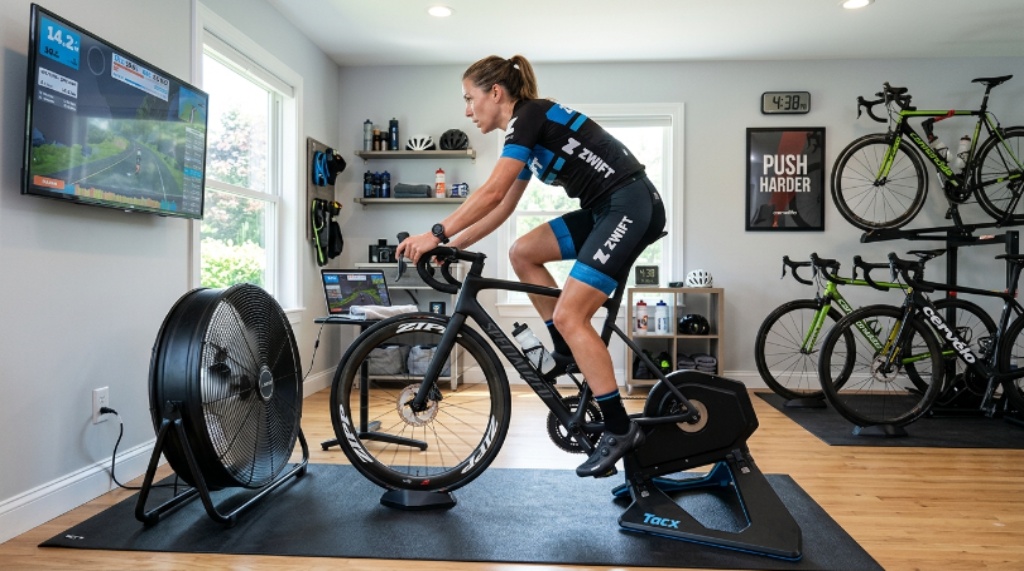
Indoor exercisers can optimize performance and comfort by learning techniques to stay cool indoor cycling workouts while maintaining exercise intensity.
Benefits of Afternoon Exercise
- Improved physical performance
- Higher body temperature
- Greater muscle flexibility
- Reduced injury risk
- Enhanced endurance capacity
Additionally, afternoon workouts provide an effective way to reduce workplace stress and improve mental clarity.
Is Evening the Best Time to Exercise?
Evening workouts work well for many busy professionals and parents. After completing daily responsibilities, people often have more time available for longer exercise sessions.
Scientific evidence indicates that evening exercise can improve strength performance and muscle recovery. Moreover, stress reduction benefits may feel more noticeable after a challenging day.
Home fitness enthusiasts often improve their experience by using equipment and accessories designed for bike trainer mat exercise environments.
Benefits of Evening Exercise
- Higher strength performance
- Better muscle flexibility
- Longer available workout sessions
- Effective stress management
- Greater exercise variety
Potential Challenges of Evening Exercise
- Unexpected commitments may interfere
- Gym facilities become crowded
- Intense exercise may affect sleep
- Motivation levels sometimes decrease
Experts generally recommend finishing vigorous exercise at least two hours before bedtime.
How Your Fitness Goals Affect Exercise Timing
Your fitness objectives significantly influence the ideal workout schedule. Therefore, understanding your primary goal helps determine the most effective exercise timing.
For Weight Loss
Morning exercise may support weight management because it establishes consistent habits. However, calorie expenditure remains more important than workout timing.
For Muscle Building
Afternoon and evening sessions often produce better strength performance. Consequently, resistance training benefits may increase during these periods.
For Endurance Training
Runners, cyclists, and endurance athletes frequently perform better during afternoon hours. Body temperature and cardiovascular efficiency typically improve later in the day.
For Mental Health
Any exercise timing can support mental wellness. Nevertheless, many individuals prefer morning workouts for mood enhancement or evening sessions for stress relief.
How Chronotypes Influence Exercise Performance
People naturally follow different biological preferences called chronotypes. Some individuals function best early in the day, while others peak later.
Common chronotypes include:
- Morning types or “early birds”
- Intermediate types
- Evening types or “night owls”
Early birds often perform best during morning workouts. In contrast, night owls may experience greater energy and performance later in the day.
Instead of forcing an unnatural schedule, consider aligning exercise with your biological preferences whenever possible.
What Does Science Say About the Best Time to Exercise?
Scientific studies provide valuable insights regarding exercise timing. However, researchers continue exploring individualized responses.
- Morning exercise may improve consistency and metabolic health.
- Afternoon exercise often maximizes physical performance.
- Evening exercise can support strength gains and stress reduction.
- Regular exercise timing improves adherence and recovery.
- Personal preference strongly influences long term success.
Current evidence suggests that the best workout time differs among individuals rather than following one universal schedule.
Practical Tips for Finding Your Best Exercise Time
Finding your ideal workout schedule requires experimentation and self observation. Fortunately, several practical strategies can help.
- Test different workout times for several weeks.
- Track your energy levels after each session.
- Evaluate sleep quality and recovery.
- Monitor workout performance and motivation.
- Choose the schedule you can maintain consistently.
Additionally, avoid comparing your exercise routine with others. Personal consistency always matters more than popular trends.
The Real Answer: When Is the Best Time to Exercise?
The best time to exercise is the time that fits your body, goals, and lifestyle. Scientific research supports different advantages throughout the day. However, consistency remains the strongest predictor of fitness success.
If mornings help you build habits, exercise early. If afternoons improve performance, train later. If evenings provide the only opportunity, embrace that schedule confidently.
Start experimenting today, track your results carefully, and create a workout routine you can maintain for years.
Frequently Asked Questions
Is exercising in the morning better for weight loss?
Morning exercise may support consistency, which helps long term weight management.
Can I exercise at night before sleeping?
Yes, but avoid intense workouts within two hours of bedtime.
What time do athletes usually train?
Many athletes train during afternoon hours for optimal physical performance.
Does exercise timing affect muscle growth?
Yes, afternoon and evening workouts may support greater strength performance.
What is the most important factor in exercise success?
Consistency remains the most important factor for long term fitness results.