Summer outings with a baby or toddler can be wonderful—until the heat, sun, and long lines start working against you. One of the most common challenges parents face at theme parks and festivals is keeping a stroller seat cool enough for a nap without overheating the child. A small battery-powered fan clipped to the stroller canopy often solves that problem, but not all fans hold up to all-day use. Before you pack for your next trip, it helps to read an honest portable clip-on fan review for theme park strollers so you know what actually survives a Florida afternoon. The tips below cover the bigger picture: keeping your child safe, cool, and comfortable from the parking lot to the parade.
Quick Answer
The most important summer safety steps for babies and toddlers on outdoor trips are limiting direct sun exposure, preventing overheating through shade, hydration, and airflow, and watching for early signs of heat illness. A clip-on stroller fan helps with airflow but does not replace shade, fluids, or scheduled breaks. Plan around peak heat hours, dress your child in light layers, and check on them every 20–30 minutes.
Key Takeaways
- Babies under 6 months should be kept out of direct sunlight entirely; use stroller canopies, muslin covers, and hats instead of sunscreen on their skin.
- Overheating signs in young children include flushed skin, irritability, lethargy, and fewer wet diapers—act at the first sign, not the last.
- A stroller fan improves comfort, but airflow alone will not prevent heat illness if the child is in direct sun or under-hydrated.
- Timing matters more than gear: early mornings and late afternoons are safer than the noon-to-4 p.m. window in most summer climates.
Why Babies and Toddlers Overheat Faster Than Adults
A child’s body surface area is larger relative to their weight, which means they absorb heat faster and lose fluids more quickly. Toddlers also sweat less efficiently than adults, and babies under a year old rely almost entirely on caregivers to regulate their environment. That is why a temperature that feels mild to you can be genuinely risky for a child strapped into a padded stroller seat.
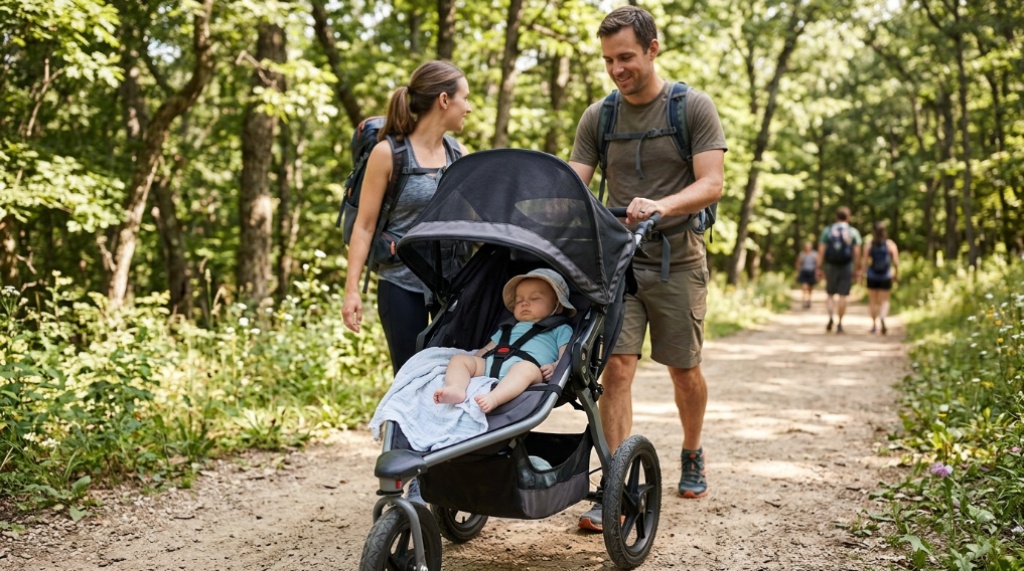
Strollers add another layer of risk. The seat fabric traps heat, the canopy can create a greenhouse effect when fully closed, and a child sitting still is not generating the air movement that walking adults get. This is the exact scenario where a small clip-on fan earns its place—not as a safety device, but as a comfort tool that reduces the buildup of trapped heat.
Signs of Heat Illness to Watch For
- Flushed or unusually pale skin
- Irritability or unusual fussiness that does not resolve with a bottle or snack
- Lethargy or difficulty waking from a nap
- Fewer wet diapers than usual, or dark urine in toddlers
- Rapid breathing or a warm, dry forehead
If you notice any of these, move to shade or air conditioning, offer fluids if the child is over 6 months, remove extra layers, and seek medical advice if symptoms do not improve within about 15 minutes, When planning outdoor outings, many parents find that having the right gear is essential. To learn more, check out how portable baby swings make daily parenting easier.
Shade, Airflow, and Clothing: The Three-Part Cooling System
No single product keeps a toddler cool outdoors. The parents who manage summer trips well usually stack three things: shade, airflow, and appropriate clothing. Skip one and the other two have to work much harder.
Shade
A stroller canopy alone is often not enough because it only blocks sun from one angle. A lightweight muslin or breathable UV cover draped over the front can help, but never fully enclose the stroller—that traps heat and reduces airflow. Umbrella-style stroller attachments that clamp to the frame give you adjustable shade without blocking the breeze.
Airflow
This is where clip-on fans come in. A fan mounted on the canopy bar or the stroller frame moves air across the child’s body, which helps sweat evaporate and reduces the greenhouse effect inside the seat. Look for a fan with a flexible neck or clip that holds position, a rechargeable battery rated for several hours, and enclosed blades or a fine grille. Exposed blades on a fan within a toddler’s reach are a genuine hazard.
One practical limitation: most compact stroller fans run two to six hours per charge on lower settings. If you are planning a full park day, bring a power bank and a charging cable, or a second fan. Fans that clip to a canopy can also vibrate loose on bumpy paths—check the mount each time you park the stroller.
Clothing
Light-colored, loose, breathable fabrics work best. One layer is usually enough in summer heat; a thin long-sleeve shirt and lightweight pants offer sun protection without much added warmth. Hats with a brim shade the face and neck. Avoid dark colors and tight elastic waistbands that trap heat against the skin.
Hydration and Feeding in Summer Heat
Babies under 6 months generally get all the fluids they need from breast milk or formula, and most pediatric guidance discourages giving plain water at that age. Offer more frequent feeds instead. For babies over 6 months and toddlers, small sips of water throughout the day work better than large amounts at once.
Watch for these practical signals that hydration is slipping:
- Diapers are drier than usual or you have changed fewer than expected
- Your toddler is asking for the bottle or sippy cup constantly but drinking very little at a time
- Mouth looks dry or lips are cracked
- Your child seems unusually tired during a normally active part of the day
Frozen fruit pouches, watermelon chunks, and cucumber slices are useful for toddlers because they add water and are easy to eat in a stroller. Skip sugary drinks and caffeinated beverages, which can worsen dehydration.
Planning Your Day Around the Heat
The single most effective summer safety decision is scheduling. In most warm climates, the highest UV and heat stress occurs between roughly 10 a.m. and 4 p.m. If you can, plan outdoor activities before 10 a.m. or after 4 p.m., and use the middle of the day for indoor attractions, lunch, or a nap in air conditioning.
A Simple Hot-Day Schedule
- Arrive at opening or shortly after, while temperatures are still moderate.
- Do outdoor rides, walks, or shows until mid-morning.
- Move indoors or into deep shade from late morning through mid-afternoon.
- Resume outdoor activity in the late afternoon when the sun angle drops.
- Plan an early exit rather than pushing through the hottest part of the evening rush.
This pattern also aligns with most young children’s nap schedules, which reduces meltdowns and makes the whole day easier.
Stroller Setup Mistakes That Make Heat Worse
Some well-intentioned setups actually increase risk. A few common ones:
- Fully covering the stroller with a blanket. This blocks airflow and can raise the internal temperature significantly. Use a breathable cover only on the sun-facing side.
- Leaving the child in a parked stroller in direct sun. Even with a fan, a stationary stroller in the sun heats up fast. Move it to shade whenever you stop.
- Overdressing for air-conditioned indoor spaces. A toddler in long sleeves and a blanket who then goes back outside in the heat can overheat quickly. Layer instead of bundling.
- Ignoring the stroller seat itself. Dark, padded seats absorb heat. A light-colored muslin or cotton seat liner helps.
- Relying on a fan as the only cooling method. A fan moves air; it does not lower the ambient temperature. In extreme heat, it can even speed dehydration if the child is not drinking enough.
Sunscreen, Insect Protection, and Other Essentials
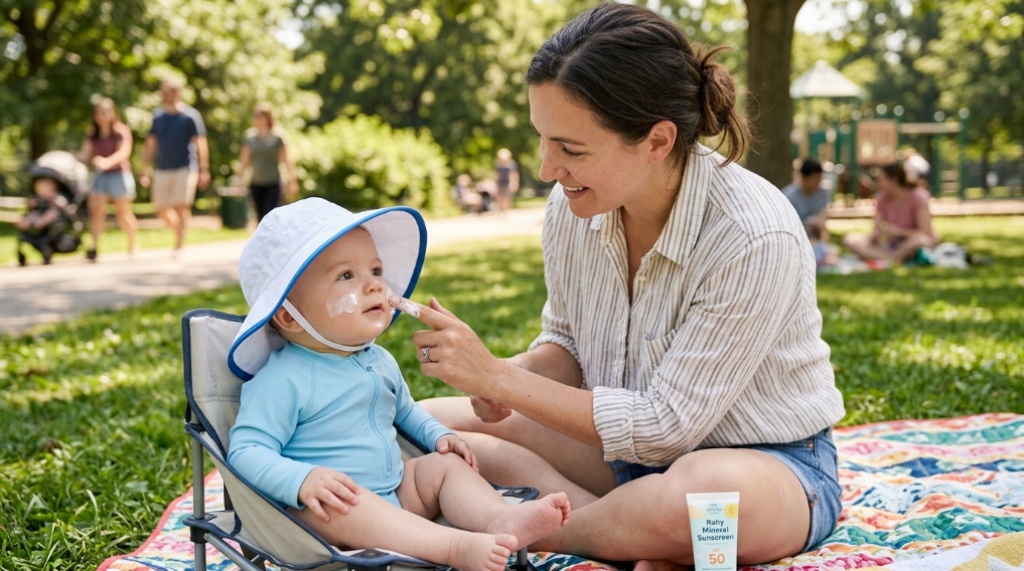
For babies under 6 months, the American Academy of Pediatrics recommends keeping them out of direct sun and using sunscreen only on small exposed areas if shade is not possible. For older babies and toddlers, a broad-spectrum mineral sunscreen with SPF 30 or higher, applied 15–30 minutes before going outside and reapplied every two hours, is a reasonable baseline.
Other items worth packing for a summer outing with a young child:
- A wide-brim hat with a chin strap
- Lightweight muslin blanket for shade or a quick cover
- Extra fluids and a sippy cup or straw cup
- A small battery-powered fan plus a power bank
- Diapers, wipes, and a change of clothes in case of sweating or spills
- A thermometer and children’s acetaminophen or ibuprofen if your pediatrician has approved it
Insect repellent is worth considering for wooded or evening outings. For children under 2 months, the CDC advises using netting rather than repellent. For older babies and toddlers, a repellent with 10–30% DEET or picaridin is generally considered safe when applied to exposed skin and clothing, not to the face or hands.
When to Cut the Trip Short
No outing is worth pushing through heat stress. End the day or move indoors if your child:
- Stops sweating in the heat
- Becomes confused, limp, or hard to rouse
- Vomits repeatedly
- Has a temperature above 103°F (39.4°C) without another obvious cause
- Shows signs of dehydration that do not improve after fluids and cooling
These can indicate heat exhaustion or heat stroke, which are medical emergencies in young children. Call emergency services or go to the nearest emergency room.
Frequently Asked Questions
Is a stroller fan safe for a 6-month-old?
Yes, if the fan has enclosed blades or a fine grille and is mounted out of the baby’s reach. Position it so air moves across the stroller seat rather than blowing directly into the baby’s face, and check the mount regularly so it does not loosen.
How long can a baby stay outside in summer heat?
There is no single safe duration. What matters is shade, airflow, hydration, and watching for signs of overheating. In high heat and humidity, limit continuous outdoor time to short stretches and take frequent breaks in air conditioning.
Can I put sunscreen on a newborn?
For babies under 6 months, the AAP recommends keeping them out of direct sun and using sunscreen only on small exposed areas when shade is not available. Ask your pediatrician if you are unsure.
Do clip-on fans actually help, or are they a gimmick?
They help with comfort by moving air across the child’s skin, which supports sweat evaporation. They do not lower the air temperature or replace shade and hydration. Their main value is reducing the trapped heat inside a stroller seat.
What should I do if my toddler seems overheated but is still sweating?
Move to shade or air conditioning, remove extra layers, offer fluids if they are over 6 months, and cool the skin with a damp cloth. If symptoms do not improve quickly or get worse, seek medical care.
Are there any signs that mean I should call 911?
Yes—confusion, loss of consciousness, hot dry skin, rapid breathing, or seizures after heat exposure can indicate heat stroke. Call emergency services immediately and begin cooling the child while you wait.
Conclusion
Keeping a baby or toddler safe in summer heat comes down to shade, airflow, hydration, and timing—not any single product. A clip-on stroller fan can make a real difference in comfort, but it works best alongside breathable clothing, a light-colored seat, scheduled indoor breaks, and frequent fluid offers. Plan your outdoor time for early morning or late afternoon, watch for early signs of heat illness, and be willing to end the trip early if your child shows any warning signs. That combination will keep summer outings enjoyable and low-risk.