Key Takeaways
- Scalp care and hair care serve two different purposes.
- A healthy scalp is the foundation for strong hair growth.
- Hair care mainly protects and maintains the visible strands.
- Ignoring scalp health can lead to thinning and irritation.
- A balanced routine includes both scalp and hair treatments.
Many people focus only on their hair, forgetting the scalp underneath. However, healthy hair actually starts at the scalp, not the strands. Scalp care and hair care may seem similar, but they serve different roles. Understanding this difference can transform how you approach your entire routine. Without proper scalp care, even the best hair products may not work well. Therefore, learning both areas helps you build a more effective routine. In this article, we break down the key differences between the two. You will also learn simple ways to care for both properly.
What Is Scalp Care Exactly
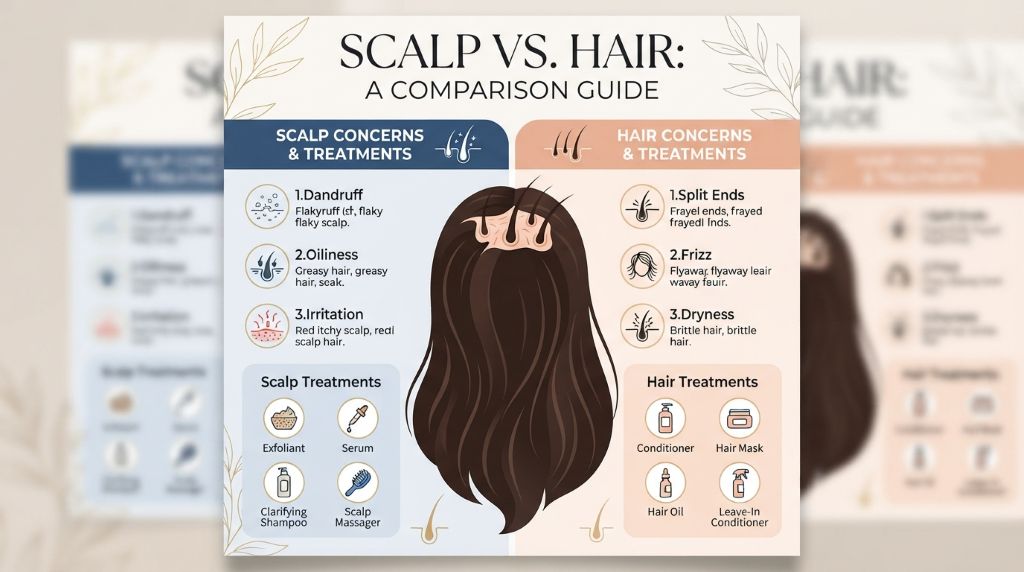
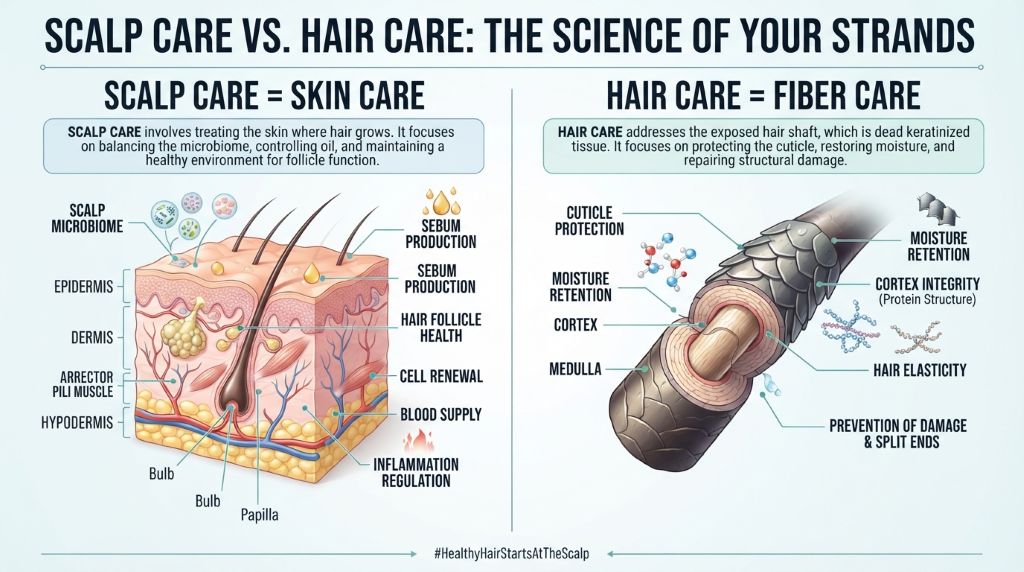
Scalp care focuses on the skin that supports hair growth. This area contains hair follicles, oil glands, and blood vessels, so keeping it clean and balanced is important. Unlike hair care, scalp care does not directly target the visible strands. Instead, it focuses on maintaining a healthy environment for hair growth.
A scalp care routine may include cleansing, exfoliation, and soothing treatments for irritated skin. It can also address common concerns such as dandruff, excess oil, and dryness. Scalp massages are another popular option and may help improve circulation around the hair follicles.
Many people also use scalp scrubs to remove buildup caused by oil, sweat, and styling products. However, excessive exfoliation can irritate the scalp, so gentle and appropriate use is important.
Poor scalp care may contribute to buildup, irritation, or discomfort. In some cases, scalp conditions can also affect shedding or hair growth. Therefore, paying attention to the scalp can help support overall hair health.
Overall, scalp care focuses on maintaining the foundation from which hair grows. It complements hair care by addressing the scalp rather than simply treating visible strand damage.
What Is Hair Care Exactly
Hair care focuses on the strands themselves, from the roots to the ends. It involves cleansing, conditioning, and protecting hair from everyday damage. Unlike scalp care, it does not directly target the skin beneath the hair. Instead, it helps maintain each strand’s strength, shine, and texture.
A typical hair care routine may include shampooing, deep conditioning, and heat protection. It can also involve regular trims, hair masks, and leave-in products. These steps help reduce dryness, breakage, and split ends. Research published in the International Journal of Trichology has also highlighted the role of conditioning in improving hair strength and reducing mechanical damage.
Protecting hair from environmental stress is another important part of hair care. Sun exposure, pollution, and harsh weather can affect the condition of the strands. Heat styling can also contribute to damage, making heat-protective products useful when using hot tools.
Without proper care, hair may become dry, brittle, and dull. Regular trims can help maintain healthier-looking ends and limit the progression of existing split ends along the hair shaft. Overall, hair care focuses on maintaining the visible strands while supporting their condition as they grow. It works alongside scalp care to create a more complete hair care routine.
Key Differences Between Scalp Care and Hair Care
Although related, scalp care and hair care serve distinct purposes. Understanding these differences helps you build a more effective routine. Here are the main distinctions between the two:
- Scalp care targets the skin; hair care targets the strands.
- Scalp care prevents issues at the root; hair care manages visible damage.
- Scalp care includes exfoliation; hair care includes conditioning and trimming.
- Scalp care supports circulation; hair care supports strength and shine.
- Scalp issues often cause hair problems, not the other way around.
These differences show why both areas need separate attention. Focusing only on hair care may miss the root cause of certain issues. For example, thinning hair may result from scalp inflammation, not damaged strands. Therefore, addressing the scalp directly may solve the underlying problem. On the other hand, focusing only on scalp care may leave strands under-protected. This can lead to dryness or breakage despite a healthy scalp. Therefore, a balanced approach considers both areas equally. Understanding these differences helps you choose the right products confidently. It also helps you communicate more clearly with hair professionals.
Signs You Are Neglecting Scalp Health
Many people do not realize when their scalp needs more attention. However, certain signs clearly indicate neglected scalp health. Recognizing these signs early can prevent long-term hair problems. Common indicators include the following:
- Persistent itchiness, even after washing your hair.
- Visible flakes, whether dry or oily in texture.
- Excessive oiliness shortly after shampooing.
- Increased shedding beyond normal daily hair loss.
- A tight, uncomfortable feeling across the scalp.
If you notice these signs, your scalp likely needs more focused care. Ignoring them may lead to worsening irritation or hair thinning over time. Additionally, untreated scalp issues can affect your overall hair growth cycle. According to research published by the National Institutes of Health, scalp inflammation can disrupt the normal hair growth process. This makes early intervention especially important. Simple changes, like using a clarifying shampoo, can help significantly. Additionally, reducing product buildup often improves overall scalp comfort. If symptoms persist, consulting a dermatologist is highly recommended. Professional guidance ensures you address the root cause effectively. Therefore, paying attention to these signs protects both your scalp and hair long term.
How to Build a Balanced Scalp and Hair Routine
Creating a balanced routine does not have to be complicated. Instead, focus on combining a few simple scalp and hair care habits. Start with a gentle, sulfate-free shampoo for regular washing. This helps cleanse the scalp without removing too much natural oil.
Next, use a scalp scrub once or twice a month to remove buildup that regular shampoo may miss. Choose a conditioner that suits your hair texture, and deep condition once a week to support moisture and strength. Before using hot styling tools, always apply a heat protectant to help reduce heat-related damage.
You can also add a gentle scalp massage while washing. Regular trims every eight to twelve weeks can help keep the ends looking healthy. Wash your hair regularly according to your hair type and avoid excessive product buildup.
The key is balance rather than doing too much. A simple, consistent routine can be easier to maintain than an overly complicated one. Over time, these habits can support a healthier scalp and stronger-looking hair.
Conclusion
Scalp care and hair care both play essential roles in overall hair health. However, they serve different purposes and require separate attention. Scalp care supports the foundation where healthy hair begins growing. Hair care, on the other hand, maintains the strength and appearance of strands. Therefore, combining both approaches creates the most effective routine. If you are ready to improve your hair health, start by evaluating your scalp today. You can also learn more about practical ways to protect your hair and recognize potential concerns in how to avoid hair loss and when it’s time to worry. A balanced routine will reward you with stronger, healthier hair over time.
Frequently Asked Questions
Is scalp care more important than hair care?
Both are important, but scalp care addresses the root cause of many hair issues.
How often should I exfoliate my scalp?
Most people benefit from scalp exfoliation once or twice a month, depending on buildup.
Can scalp problems cause hair loss?
Yes, scalp inflammation or clogged follicles can contribute to thinning and increased shedding.
What products are best for scalp care?
Look for gentle exfoliants, clarifying shampoos, and soothing ingredients like tea tree oil.
Should I use different products for scalp and hair?
Yes, scalp products target the skin, while hair products focus on strand health and strength.