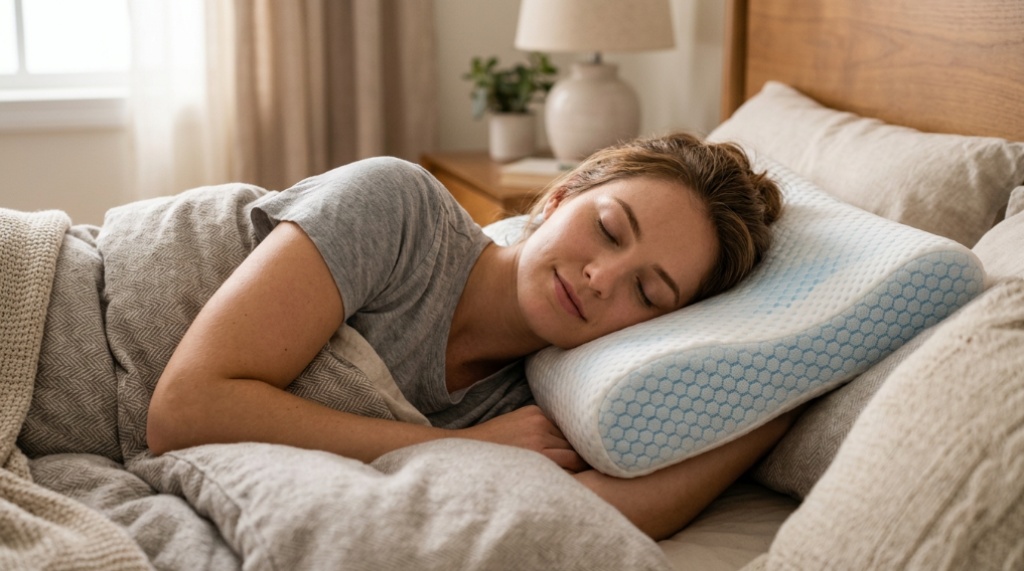
You kick off the covers at 2 a.m., flip the pillow to the cool side, and still wake up with a damp neck. Most people blame the room, the thermostat, or stress — but the bedding touching your body all night is often the real culprit. Pillows, mattress materials, and sheets each trap or release heat differently, and small choices can decide whether you sleep cool or wake up drenched. If night sweating is your main problem, a detailed guide to cooling pillows for night sweats can help you match the right materials to your body and climate. Here is how your sleep setup actually controls temperature.
Quick Answer
Your pillow, mattress, and bedding affect sleep temperature because they sit between your body and the air. Materials with low breathability and high heat retention — memory foam, polyester fills, and tight-weave sheets — trap moisture and heat against your skin, while breathable options like latex, gel-infused foam, wool, and linen move heat and moisture away. The biggest gains come from fixing your pillow first, then sheets, then the mattress topper or mattress itself.
Key Takeaways
- Heat leaves your body mainly through your head, neck, and upper back, which is why your pillow has outsized influence on how cool you sleep.
- Trapped moisture, not just trapped heat, causes that clammy 3 a.m. wake-up — breathable materials matter more than “cooling” marketing claims.
- Thread count and weave affect airflow more than most shoppers realize; a tightly woven 600-thread-count sheet can sleep hotter than a looser 200-thread-count one.
- Changing your pillow and sheets usually costs far less than replacing a mattress and delivers noticeable results for most hot sleepers.
- Body weight, room temperature, and hormones also drive night sweats, so bedding changes help but may not fully solve a medical cause.
Why Your Body Loses Heat Through Your Pillow and Bedding
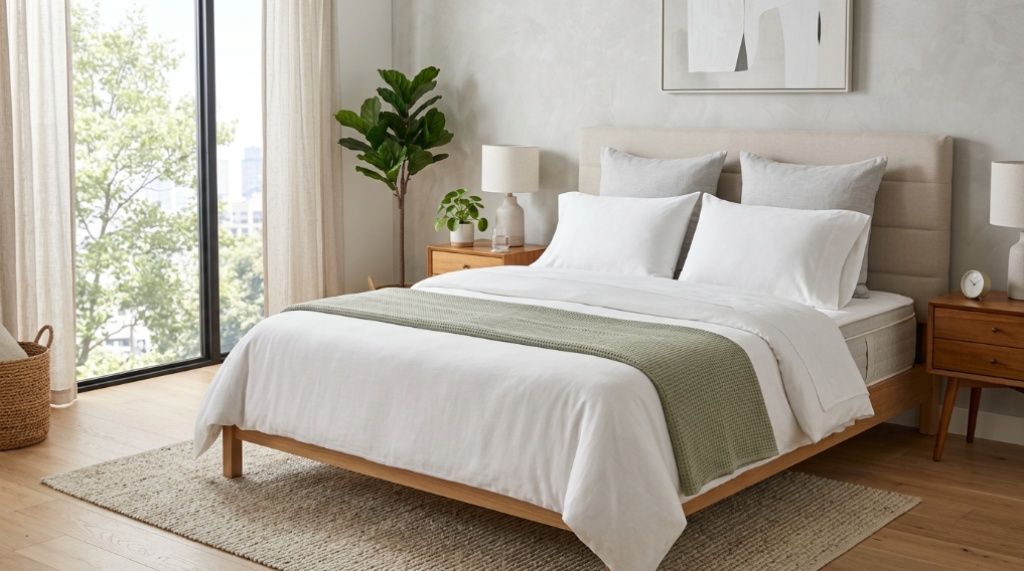
Your body cools itself at night partly by releasing heat through the skin, and the head, face, and neck are especially efficient radiators. That is why a pillow that reflects heat back at you feels so uncomfortable within minutes, while a breathable one feels almost instantly cooler.
Two mechanisms matter here: conduction and moisture transfer. Conduction is how quickly a material pulls heat away from your skin. Moisture transfer is how well it lets sweat evaporate instead of pooling. A material that conducts heat well but traps moisture, or vice versa, still leaves you uncomfortable. The best cooling setups handle both.
Heat Retention vs. Breathability
Dense foams like traditional memory foam are excellent at contouring to your body but poor at letting heat escape, because air cannot circulate through their closed cell structure. Open-cell foams, gel infusions, and naturally porous materials like latex and wool behave differently — they allow air and vapor to move, which is what keeps your skin temperature closer to comfortable, If waking up hot is also leaving your body aching, check out this guide on fix morning stiff neck in dallas, tx to help align your spine and improve your overall rest.
How Your Pillow Shape and Fill Affect Temperature
The pillow is usually the first place hot sleepers notice a problem, and it is also the cheapest component to replace. Fill material, cover fabric, and even pillow height all influence how much heat builds up around your head.
Fill Materials Compared
| Fill Type | Breathability | Moisture Handling | Best For |
|---|---|---|---|
| Shredded memory foam | Low to moderate | Poor | Sleepers who want contouring and can tolerate some warmth |
| Gel-infused foam | Moderate | Moderate | Those who want foam support with slightly better heat dissipation |
| Latex | High | Good | Hot sleepers who want firm, springy support |
| Down or down alternative | High | Moderate | Sleepers who want softness and airflow |
| Buckwheat or hull fill | Very high | Good | Sleepers who want adjustable loft and maximum airflow |
Pillow Height and Sleep Position
A pillow that is too tall or too flat changes how much skin contacts the surface. Side sleepers generally need a taller pillow to keep the neck aligned, while back and stomach sleepers need less height. More contact area means more trapped heat, so matching loft to your sleep position can reduce the warm patch under your head without changing materials at all.
How Mattress Materials Trap or Release Heat
Your mattress is the largest surface your body touches, so its materials set the baseline for how warm you sleep. Traditional memory foam is the most common heat trap, because its dense structure absorbs body heat and holds it. Innerspring and hybrid mattresses with coil cores generally sleep cooler because air moves through the open spaces.
If replacing the mattress is not realistic, a breathable topper or a wool mattress pad can add a cooling layer for far less money. Wool is particularly useful because it wicks moisture while remaining breathable, unlike synthetic pads that seal heat in.
Why “Cooling” Mattress Labels Can Mislead
Many mattresses advertise cooling gels, phase-change materials, or graphite infusions. These can help at the surface, but their effect is usually modest and temporary — often fading once the material reaches skin temperature. A genuinely breathable construction, open coils, and moisture-wicking covers matter more than a cooling buzzword printed on the tag.
Why Sheets and Bedding Often Decide the Outcome
Sheets sit directly against your skin, so their weave and fiber content determine whether sweat can evaporate or gets trapped. This is where many hot sleepers see the fastest improvement after changing their pillow.
Fiber and Weave Comparison
- Linen: Highly breathable, wicks moisture well, feels cool to the touch, but wrinkles and costs more.
- Cotton percale: Crisp, breathable, and durable — a solid affordable choice for hot sleepers.
- Cotton sateen: Smoother and heavier, traps more heat; better for cool sleepers.
- Bamboo viscose: Soft and moisture-wicking, though durability varies by quality.
- Microfiber and polyester blends: Inexpensive but poor at moving heat and moisture; usually the hottest option.
Weave matters as much as fiber. A looser percale weave allows more airflow than a tight sateen or high-thread-count sheet, even when both are cotton. That is why thread count alone is a poor indicator of cooling performance.
Matching Your Setup to Your Situation
The right combination depends on why you overheat. Use the following as a starting point rather than a fixed rule.
- You wake up with a sweaty head and neck: Start with a latex, down, or hull-filled pillow and a breathable pillowcase. This is the highest-impact change.
- Your whole body feels hot: Switch sheets to linen or percale cotton and add a wool or breathable topper over a foam mattress.
- You sleep hot only in summer: Keep a lighter blanket and consider a second, cooler pillow for warm months rather than replacing everything.
- You sweat despite a cool room: Speak with a doctor, since hormonal, medication, or medical causes can drive night sweats that bedding cannot fix.
Common Mistakes That Keep You Warm
Small errors quietly undo otherwise good choices. Avoid these when building a cooler sleep setup.
- Stacking two pillows, which doubles trapped heat under your head.
- Using a waterproof mattress protector made of non-breathable plastic or vinyl, which seals heat and moisture beneath you.
- Choosing a high thread count without checking fiber and weave — tight weaves often sleep hotter.
- Buying a “cooling” pillow without checking fill type, since the cover can be cool while the core still traps heat.
- Ignoring pajamas: synthetic fabrics hold sweat against your skin just like polyester sheets do.
Frequently Asked Questions
Do cooling pillows actually work?
They can help, but results depend on the fill and cover rather than the label. Pillows with breathable cores like latex, down, or hull fill and moisture-wicking covers tend to reduce heat buildup more reliably than gel-infused foam. Expect improvement, not a total fix for medical night sweats.
What is the single most effective change for a hot sleeper?
For most people, changing the pillow and pillowcase delivers the fastest, cheapest improvement, because the head and neck release a lot of body heat. Upgrading sheets to breathable linen or percale is the next best step.
Is memory foam always bad for hot sleepers?
Traditional memory foam sleeps warm because it traps heat, but newer open-cell and gel-infused versions perform better. Even so, latex and spring-based options usually run cooler for people who overheat easily.
Can a mattress topper make my bed cooler?
Yes, if it is breathable. Wool, cotton, and open-cell foam toppers can add airflow and moisture wicking over a warm mattress. A waterproof synthetic topper can do the opposite and make things worse.
Does thread count matter for sleep temperature?
Less than most buyers assume. Weave and fiber decide breathability, so a lower thread count percale sheet often sleeps cooler than a high thread count sateen sheet made from the same cotton.
When should I see a doctor about night sweats?
If you sweat heavily regardless of bedding, room temperature, or season, or if night sweats come with fever, weight loss, or other symptoms, see a doctor. Bedding changes cannot resolve hormonal, medication-related, or medical causes.
Conclusion
Your pillow, mattress, and bedding control sleep temperature because they decide how quickly heat and moisture leave your body. Fix the pillow and sheets first — that is where most hot sleepers notice the biggest difference for the least money — then address the mattress with a breathable topper if needed. Choose materials based on airflow and moisture handling rather than marketing labels, and treat persistent night sweats as a medical question, not just a shopping one.